Choosing the right print method shapes the entire look of your wedding stationery. The world of wedding invitations printing offers many options that suit a wide range of styles and budgets. Each method creates a different finish, texture, and level of detail. When you understand what each one brings to your design, you can select a method that fits your vision with confidence.
This guide breaks down the most popular print methods used in wedding invitations printing. You will learn what the method is, its pros and cons, and its price point.
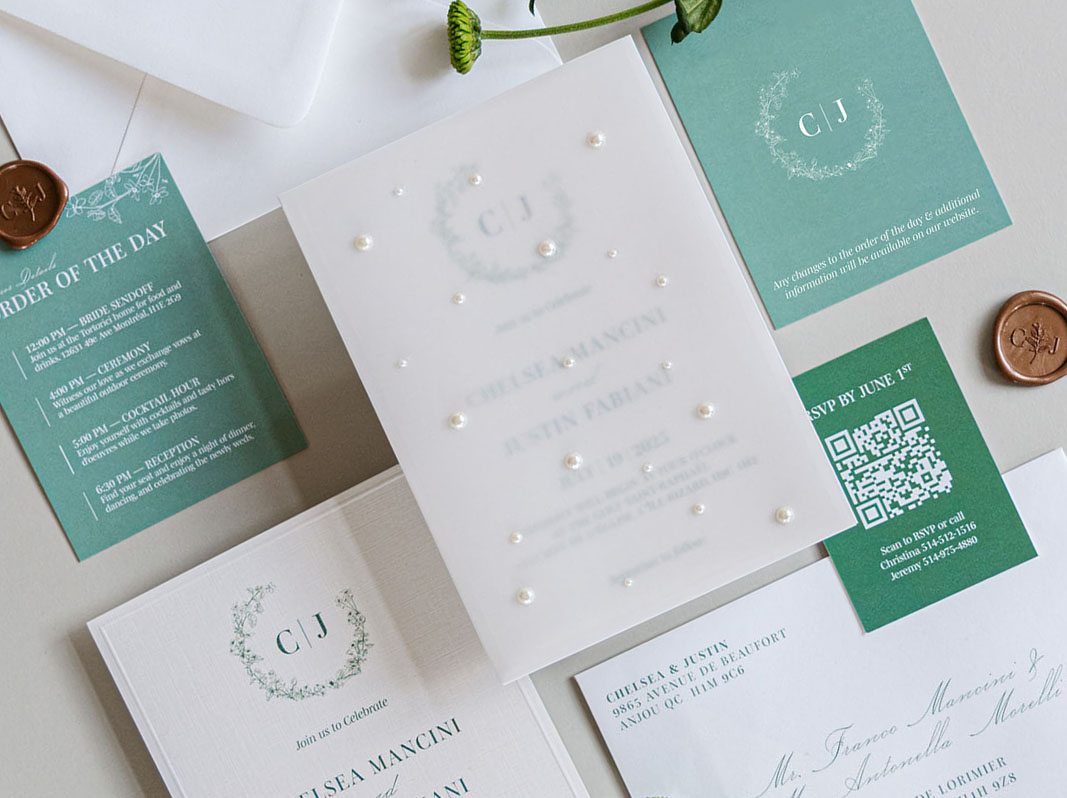
Digital Printing
Digital printing uses modern inkjet or laser printers to create flat, full-color designs on paper. This method is fast and versatile, ideal for colorful or intricate artwork.
Price point:
$ — Most affordable option
Pros:
- Budget-friendly
- Quick turnaround time
- Wide color range and design flexibility
- Many paper textures and thicknesses
Cons:
- Lacks texture or dimension
- Difficult to print colors accurately
- Simplest result
- Price becomes more expensive the more you print
Best for:
Couples seeking beautiful, yet affordable invitations.
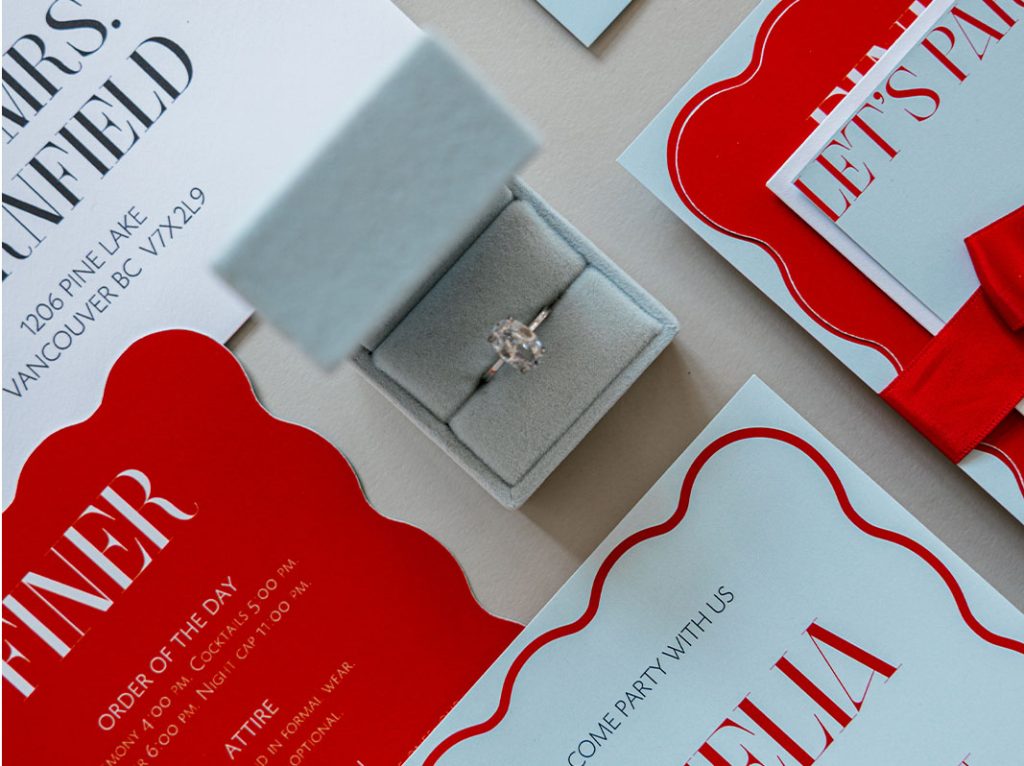
Jet Varnish
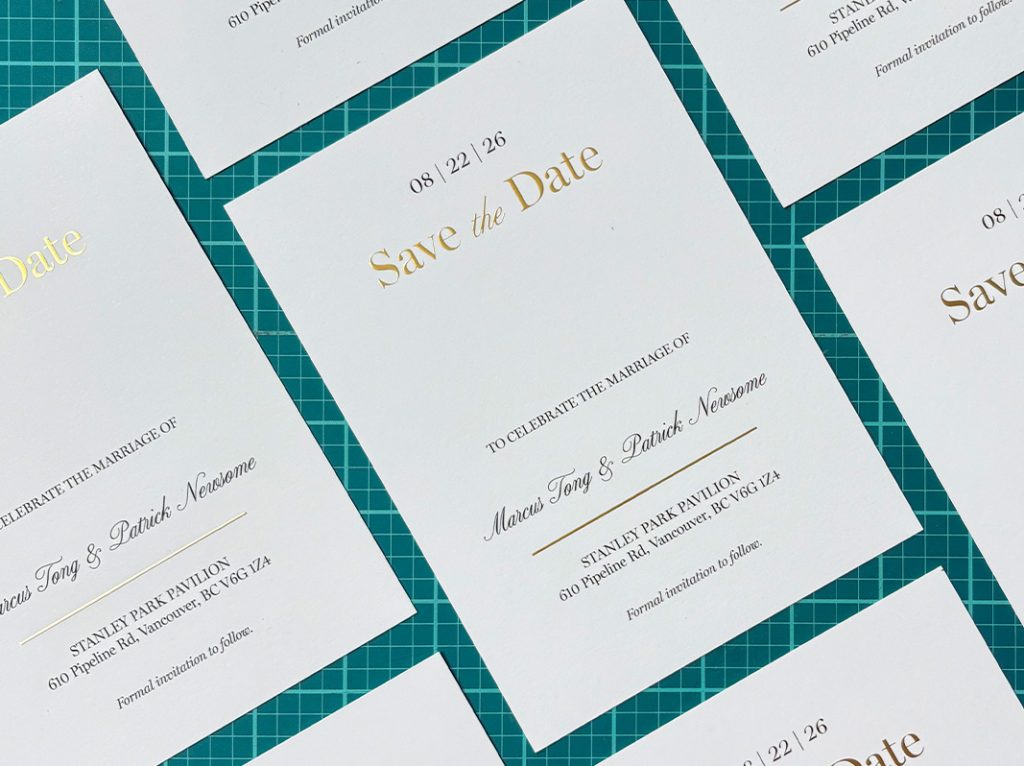
Jet varnish printing applies a shiny, metallic foil layer to your design, making certain elements pop. Think gold, silver, or rose gold accents. The process lifts selected parts of your artwork so they catch the light, such as names, borders, crests, and fine lines.
This method adds glamour and dimension. It works well on both simple and detailed invitations. You can add a soft glow or a bold metallic effect. Choose jet varnish if you want your invitations to feel luxurious with light catching detail. It adds a polished look that feels elevated without moving into premium pricing.
Price point:
$$ — Mid-range. The cost varies on how much metallic is printed.
Pros:
- A luxurious and elegant touch
- Draws attention to key details
Cons:
- Works with certain papers only, such as those without textures
- Requires careful design preparation
- Price becomes more expensive the more you print
Best for:
Couples who want glamorous, eye-catching invitations with metallic accents.
Letterpress
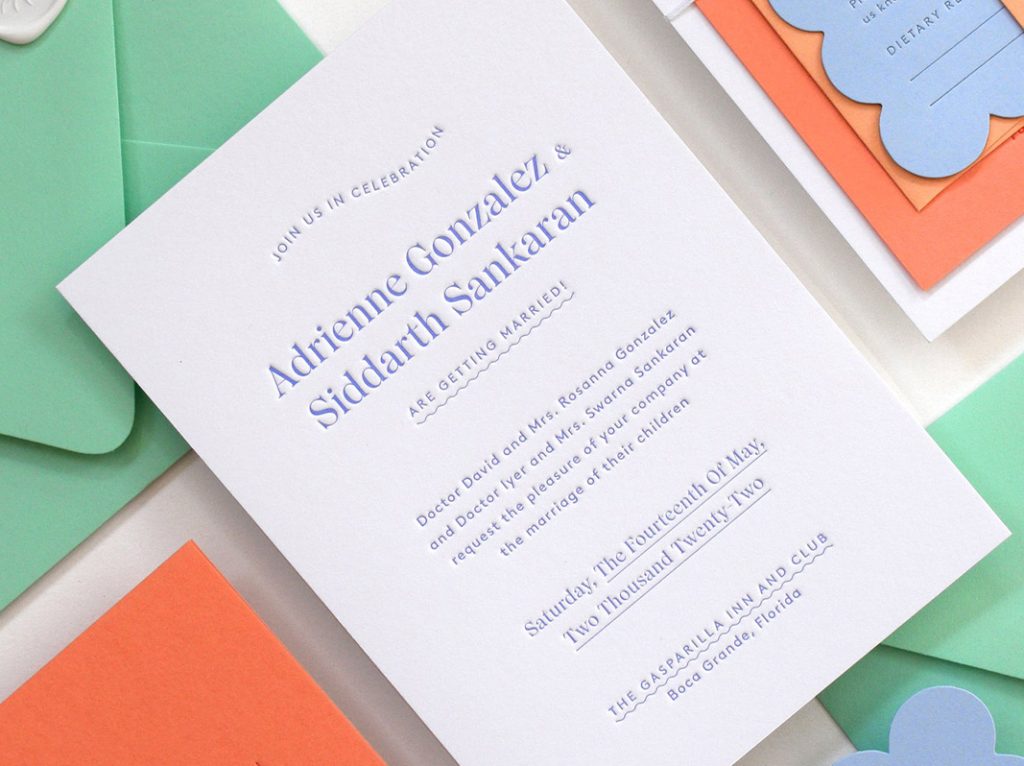
Letterpress printing offers a timeless tactile finish. This method presses inked plates into thick cotton paper. The pressure creates soft impressions that guests can feel. It creates a sense of craft and depth that no flat method can match.
Letterpress pairs beautifully with simple, refined layouts. Many couples choose it for classic themes or black tie events. The textured feel also works well for organic, soft, or minimal styles.
Letterpress sits at a higher price point due to the thick paper and Pantone inks required. The result feels luxurious and memorable.
Price point:
$$$ — Most expensive option
Pros:
- Timeless and sophisticated
- Cotton paper offers a soft, luxurious texture
- Results in a finish that is unmatched by any other print method
- Price becomes cheaper the more you print
- Ensures a consistent color across designs by using Pantone inks
Cons:
- Plate costs are pricey and can’t be changed once made
- Design, color, and paper limitations (e.g. dark background with light color text or elements is not always possible)
- Requires design expertise to set up files correctly
- Each color needs its own plate. This means multicolor designs cost more
- Production time is longer than other print methods
Best for:
Couples choose letterpress for the rich tactile impression and soft cotton paper that feels thoughtful and refined.
Embossing or Debossing
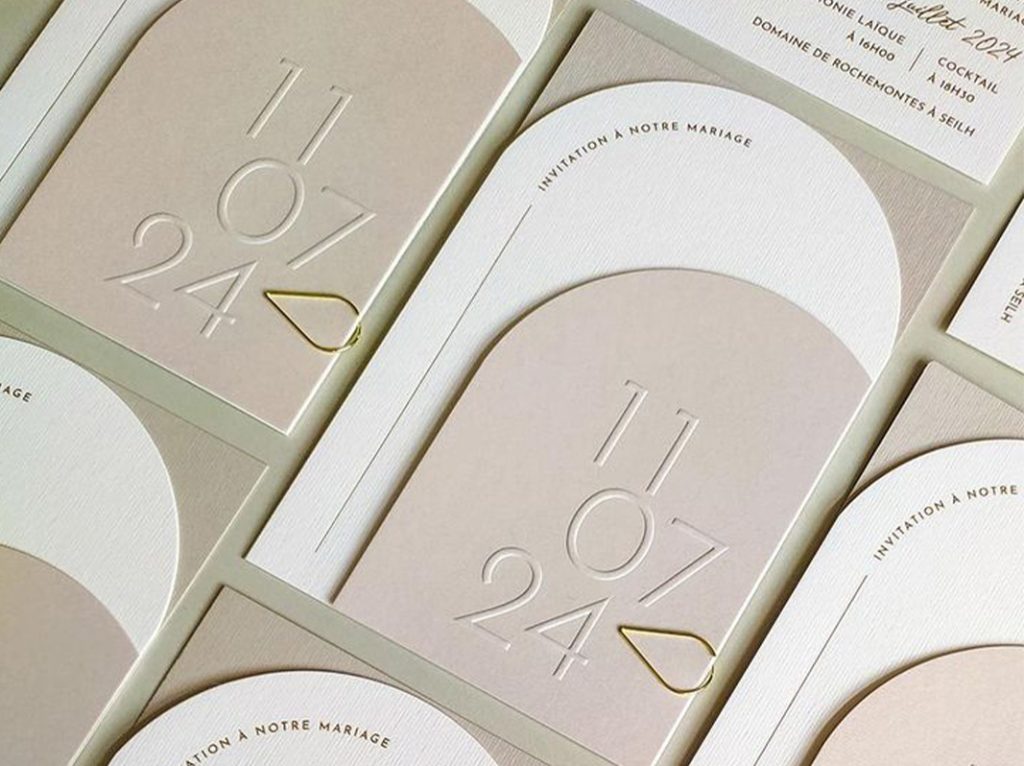
Embossing raises your design above the paper surface, while debossing presses it in. Both methods create a 3D effect without using ink. They bring elegance to monograms, crests, borders, and simple motifs. These methods deliver a premium look and can be achieved through letterpress or offset printing, with Pantone inks or CMYK inks.
Embossing and debossing work well for couples who want a high end textured design. They create a statement with clean shapes and strong detail. When used with minimal art, the effect feels graceful and modern.
Price point:
$$$ — Premium option
Pros:
- Results in a 3D effect with or without ink
- Works with papers of different textures and thicknesses
- Can use CMYK inks (more cost effective) or Pantone inks (more color accuracy)
Cons:
- Plate costs are pricey and can’t be changed once made
- Design and paper limitations
- Requires design expertise to set up files correctly
- Production time is longer than digital printing or jet varnish
Best for:
Couples seeking a high-end, textured invitation.
How To Choose the Best Method for Your Wedding Invitations Printing
The right print method for wedding invitations depends on your budget, style, and vision. Digital printing suits couples on a budget, while foiling or embossing elevates invitations with a luxurious touch. Letterpress offer timeless beauty for those seeking something unique. Whatever you choose, your invitations will set the tone for a day to remember.
Need help deciding? Work With an Expert
Contact me for a consultation, where I walk you through samples of each print method and help you create custom wedding invites that perfectly reflects your story and style.