
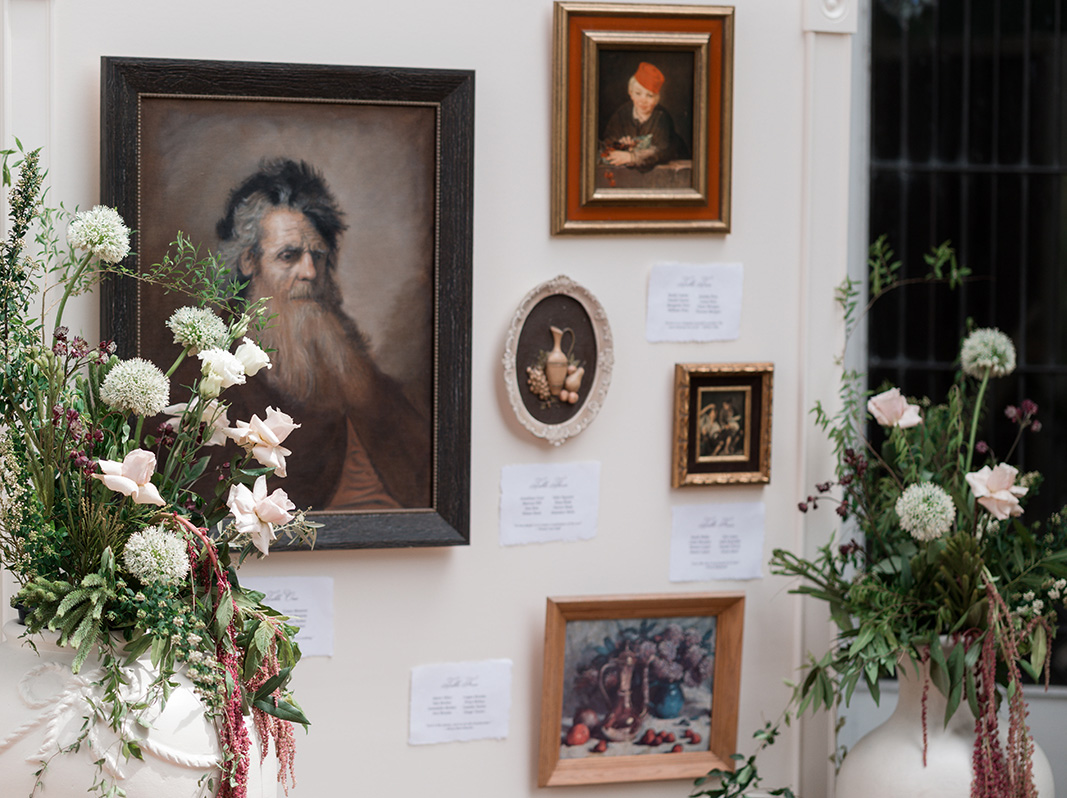
Your reception begins before dinner is served. It starts the moment guests enter the space and look for direction. Guests want clarity. They want ease. They want to feel considered.
A seating chart for a wedding shapes that first impression. It prevents hesitation and eliminates guesswork, allowing guests to transition smoothly from cocktail hour into dinner. Without structure, even a beautifully styled reception can feel disorganized. Guests crowd near tables. They search for their names. They interrupt vendors for help. That uncertainty shifts the tone of the evening.
Thoughtful design solves this. A well-planned seating chart for a wedding supports guest comfort while enhancing your aesthetic. When layout, materials, typography, and placement work together, the result feels seamless. When you work with me, I treat your seating chart as both a functional guide and a visual focal point. Every detail supports your larger wedding vision.
When and Why a Seating Chart Is Necessary
A seating chart for a wedding becomes essential as your guest list grows or your reception becomes more structured. It guides arrivals, supports catering and service, and ensures everyone finds a comfortable spot. Whether you have a small gathering or a large formal dinner, understanding guest count, seating style, and event formality helps you determine when a seating chart is necessary.
Guest Count Thresholds
Guest count drives logistics. Intimate weddings under 40 guests may function well with place cards alone. Once your list grows beyond 50 guests, structure becomes important.
At 75 guests, arrivals happen in waves. Groups approach the entrance at once, and without direction, congestion builds quickly.
At 100 guests or more, a seating chart for a wedding becomes essential. It keeps dinner service on schedule and reduces repetitive questions for planners and venue staff. It ensures guests move with confidence rather than confusion.
Even at moderate guest counts, a centralized display creates calm and signals organization and care.
Assigned Seating Versus Open Seating
Open seating works best for relaxed receptions, such as backyard weddings or daytime celebrations.
Assigned seating creates a more curated and formal experience. Each guest has a designated seat, supporting plated dinners, dietary coordination, and thoughtful placement of family members.
Formal Versus Semi Formal Receptions
Formal receptions demand precision. Multi-course meals rely on accurate table assignments, and catering teams depend on correct counts and placement.
Semi-formal weddings allow more flexibility, yet structure still improves the experience. Even relaxed celebrations benefit from clear guidance.
A seating chart communicates intention. It shows that every detail has been considered.
Common Seating Chart Layouts
Once you know you need a seating chart for a wedding, the next step is choosing a layout. Different formats influence readability, guest flow, and overall style. From alphabetical lists to table-by-table arrangements, each approach has pros and cons depending on your guest count and aesthetic goals. Choosing the right format ensures the chart is both functional and visually polished. I help couples choose a layout based on all the considerations for their specific wedding.
Alphabetical Guest Lists
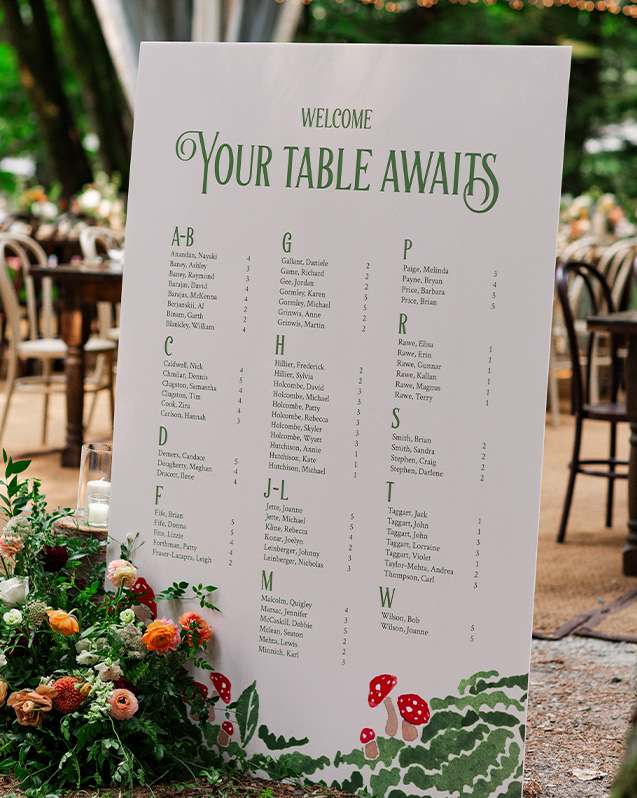
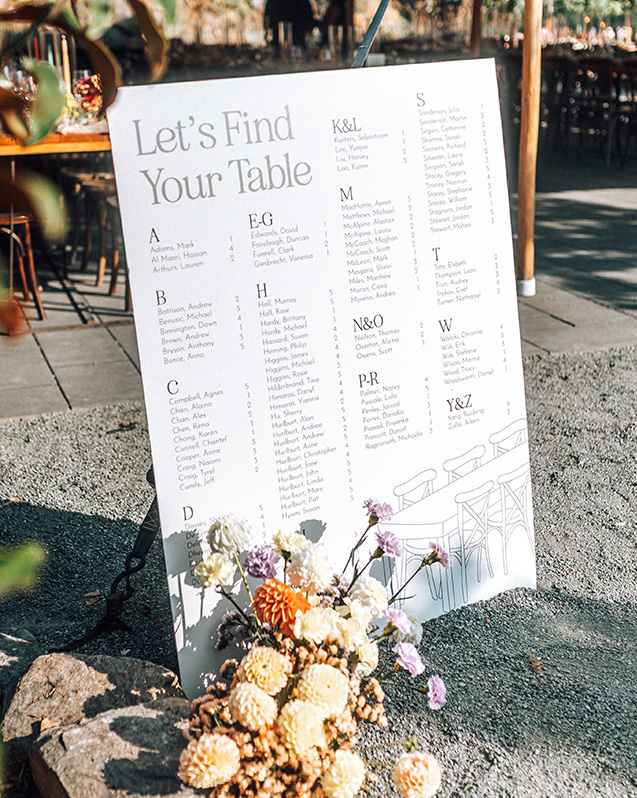
Alphabetical layouts remain the most efficient option for larger guest counts. Guests instinctively search for their names.
You can organize by first name or last name. Last name sorting feels traditional and suits formal events. First name sorting feels modern and personal. For weddings over 120 guests, I often recommend alphabetical formats. They reduce clustering around specific tables and allow guests to scan quickly.
Spacing and hierarchy matter. Columns must remain clean and evenly aligned. Adequate line spacing improves legibility from a distance. When I design an alphabetical seating chart for a wedding, I balance density with clarity so the display remains both beautiful and functional.
Pros of alphabetical layouts:
- Easy for guests to scan
- Efficient for large guest counts
- Reduces clustering around specific tables
Cons:
- Requires careful spacing
- Can look dense without thoughtful design
Table-by-Table Formats
Table-grouped layouts organize guests beneath each table heading. This style highlights table names or themes and works well for smaller weddings.
For celebrations under 100 guests, this layout feels elegant and easy to navigate. It allows more creative freedom within each grouping. However, larger weddings may experience crowding around certain table numbers, and scanning can take longer if lists are dense.
Pros of table-by-table formats:
- Clean visual structure
- Emphasizes table names or themes
- Works well for smaller guest counts
Cons:
- Slower scanning time can lead to crowding around the sign
In sum, the right format depends on your guest count, venue layout, and overall design goals. I guide you toward the structure that best supports your reception flow.
Designing for Guest Flow
Placement, organization, and clarity affect how smoothly guests move from the entrance to their tables. Thoughtful design minimizes bottlenecks, reduces confusion, and helps guests feel at ease, creating a seamless start to the evening.
Placement Near the Entrance
Place the seating chart where guests naturally pause before entering the dining space. Avoid positioning it directly in front of doors. Leave room for gathering and circulation.
Lighting plays a major role. Dim ballrooms require strong contrast. Outdoor venues require glare control. Guests should read names comfortably without straining.
I coordinate with planners and venues to confirm where your seating chart would be placed. Strategic placement prevents congestion and maintains a calm atmosphere.
Avoiding Bottlenecks
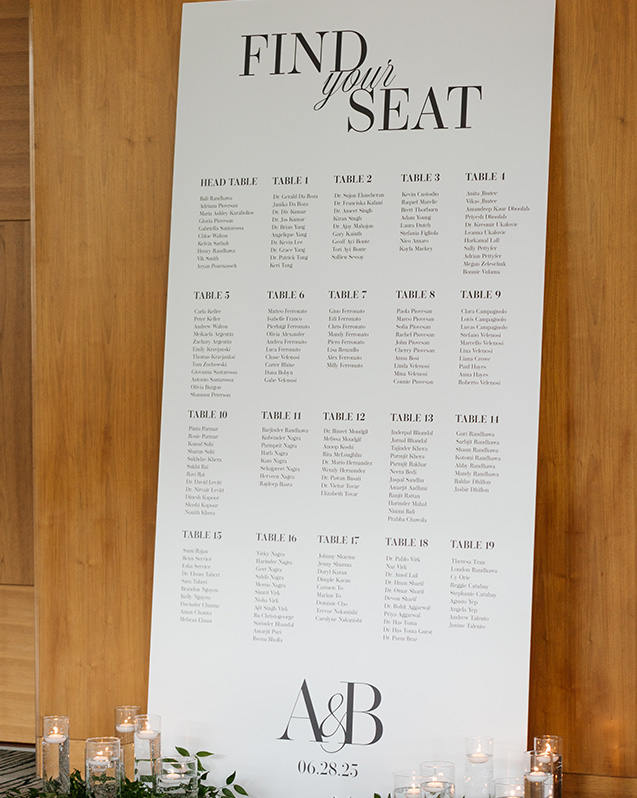
Large guest lists require proactive planning. A 2 by 3 foot seating chart will be hard for 200 guests to quickly find their seat, and would create crowding. I’m here to help create the right seating chart for your wedding reception, whether that’s one large statement piece, or multiple smaller pieces.
Physical spacing matters as much as graphic design. Guests need room to step aside after finding their names. Movement should feel natural and unhurried.
Clear Organization for Quick Scanning
Hierarchy improves speed. Table numbers should stand out clearly, and guest names should align consistently. Decorative fonts belong in headings only.
Clean typography improves readability from several feet away. Guests should locate their names within seconds.

Design Details That Elevate the Experience
Your seating chart is a design element as much as it is a logistical tool. Material choice, typography, and display style can transform it into a statement piece that complements your stationery. Cohesion with colors, signage, and overall decor ensures your chart feels intentional and elegant rather than an afterthought.
Materials
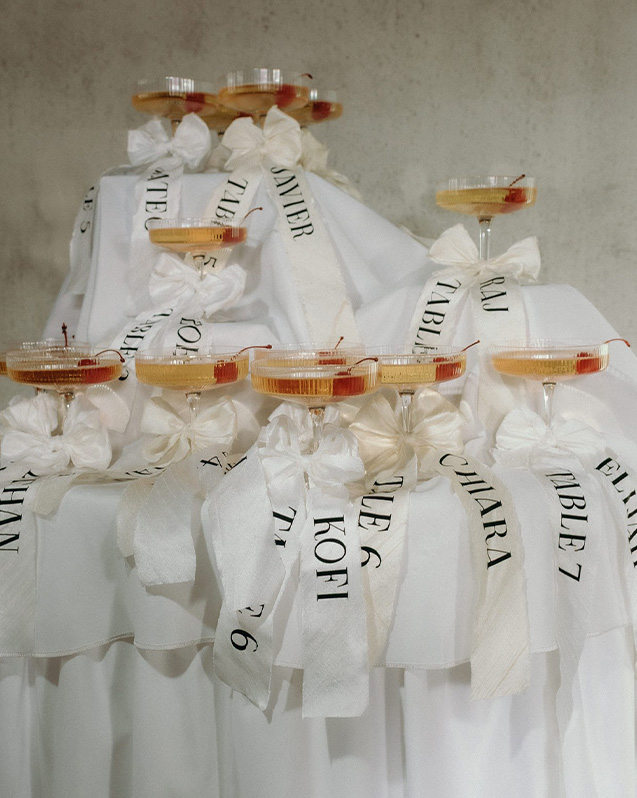
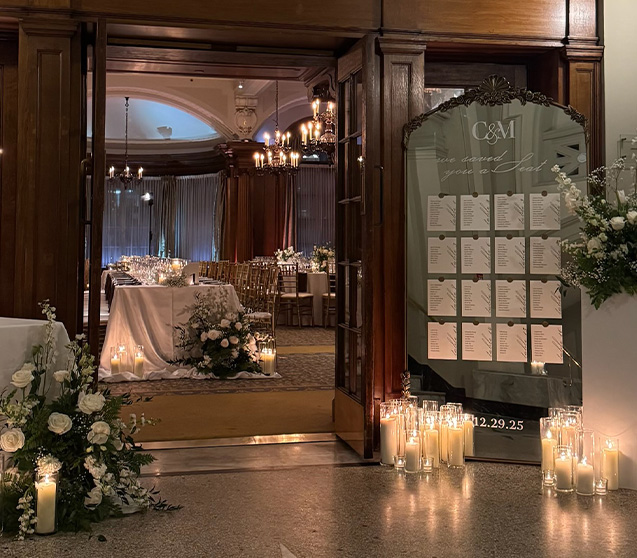
Material choice shapes perception. Common options include mirror, acrylic, foamcore boards, and fabric backdrops. Mirror creates romance and elegance, acrylic feels sleek and modern, and fabric backdrops soften grand spaces. Foamcore offers structure and versatility. Freestanding pillars add dimension and presence. Custom materials enhance refinement.
When you work with me, I recommend materials that complement your venue, florals, and overall wedding aesthetic. The seating chart should feel integrated within your overall design.
Cohesion With Your Overall Stationery
Consistency builds luxury. Typography should echo your invitations. Color tones should reflect your palette. Spacing and layout should feel intentional.
A seating chart for a wedding should never feel like an afterthought. It belongs within your complete stationery story, from save-the-dates to menus and signage. I design every element with cohesion in mind. Guests may not analyze each detail, yet they feel when everything works together.
Signage Stands and Display Placement
The stand supports the presentation. Gold easels suit formal venues, wooden stands complement natural settings, and custom frames elevate refined designs.
Height also matters. The display should sit at eye level for comfortable reading. Thoughtful presentation transforms the seating chart into a focal moment within the reception space.
Etiquette and Accuracy
A beautiful seating chart for a wedding loses impact if it contains errors. Design attracts attention, but accuracy builds confidence. Once displayed, even small mistakes stand out. Precision protects the polished tone of your reception.
Proper Name Formatting
Every name should appear exactly as your guest prefers. Confirm spellings from RSVP responses rather than older drafts. Avoid shortening names unless the guest consistently uses that version.
Decide early whether to include titles. Formal weddings may use Mr, Mrs, or Doctor; semi-formal celebrations may omit them. Maintain consistency across the display.
Structure also matters. Married couples may share a line. Unmarried couples are often listed separately. Choose one approach and apply it uniformly. When I design a seating chart for a wedding, I review capitalization, spacing, and alignment carefully to ensure a cohesive result.
Titles, Plus Ones, and Families
Clarify plus ones before sending your design to print. Replace ‘and Guest’ with a confirmed name whenever possible. This small step reflects thoughtfulness and prevents last-minute corrections.
For families, decide whether to list each child individually or group children beneath their parents. Keep spacing clear to avoid overcrowding. Be mindful of sensitive family dynamics when assigning tables. The seating chart reflects how intentionally you have planned the evening. To learn more about creating seating arrangements, read my blog post: From Seating Arrangements to Seating Charts
Final Proofing and Timing
Finalize seating assignments only after your RSVP deadline has passed. Guest lists often shift in the final weeks. Printing too early increases the risk of reprints.
Review your seating chart in stages. Check spelling first, confirm formatting consistency next, then verify table numbers against your master list and catering count. Ask a planner or trusted friend to review it as well. Fresh eyes catch overlooked details. Accuracy may not feel glamorous, yet it defines the guest experience.
Conclusion
A well-designed seating chart for a wedding transforms the start of your reception. It improves guest flow, reduces confusion, and reinforces your aesthetic vision.
Thoughtful layout supports efficiency. Cohesive materials elevate your decor. Careful proofing protects your timeline and your peace of mind.
When you work with me, I manage these layers with precision and intention. I design your seating chart to function beautifully and reflect your unique wedding style. I anticipate challenges before they arise so you can focus on celebrating.


