
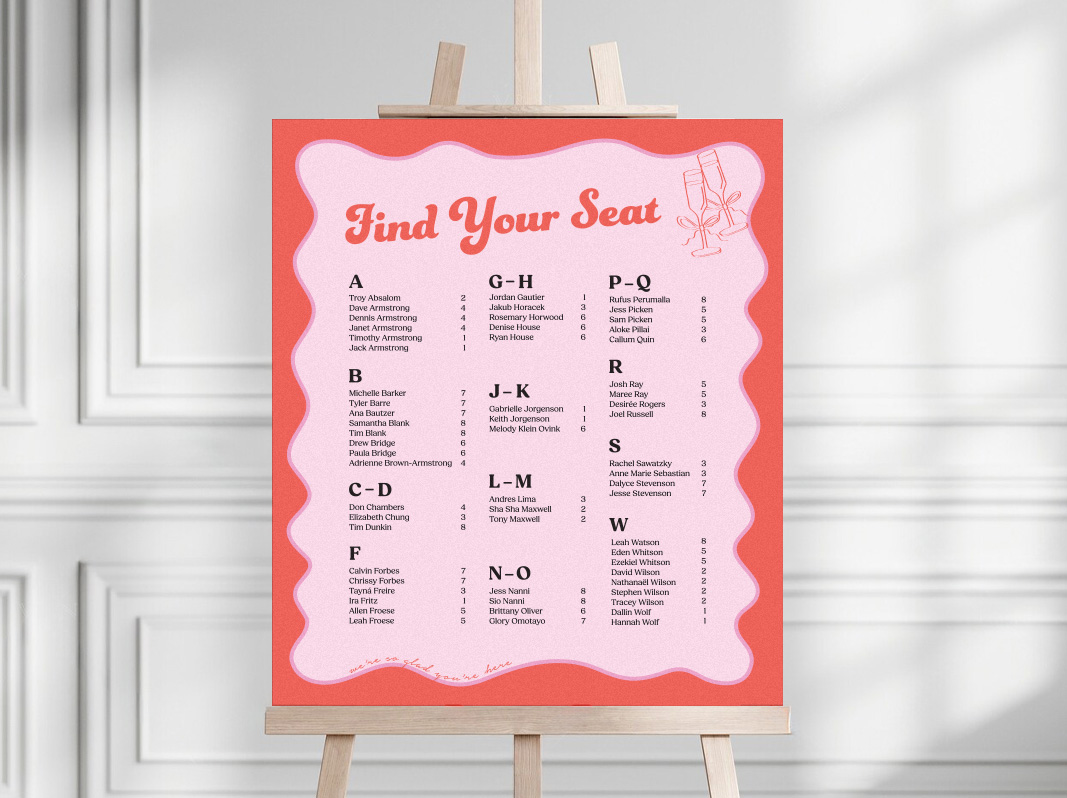
If you’re staring at a spreadsheet full of names and feeling stuck, don’t worry. This guide will walk you through how to make your seating arrangements—then show you the best ways to organize seating charts for weddings.
Let’s break it down step-by-step.
Part 1: How to Make Your Wedding Seating Arrangements
First, you need to decide who sits where. This part takes some thought, but a clear plan will save you time, drama, and last-minute changes later.
Here are 6 tips to help you create intentional, stress-free seating arrangements:
1. Start with Your VIP Tables
Begin by seating the most important guests—your immediate family, wedding party, and closest friends.
2. Group Guests by Relationship or Connection
The easiest way to start organizing your list is by grouping people who already know each other. Think about:
- Family groups
- College friends
- Work colleagues
- Neighbours
- Family friends
If you’re unsure how to seat someone, place them near guests they’ll connect with—age, interests, or shared history can guide you.
3. Place Energetic Guests Near the Dance Floor
Younger guests, college friends, and dance lovers will appreciate being close to the action. Older guests, or those who prefer quieter conversations, will be happier seated farther away from speakers or the DJ.
Balance is key. Give your guests the right energy zone based on what you know about them.
4. Avoid Difficult Pairings
Think about past tensions, breakups, or sensitive family dynamics. Seat these guests at different tables—and ideally, on opposite sides of the room if needed.
5. Keep Tables Evenly Filled
Before you finalize your seating plan, check with your venue or planner about how many guests comfortably fit at each table size. Every layout is different, and the number can change based on table shape, room spacing, or whether you’re using chargers, large centerpieces, or place cards.
Once you know your capacity, aim to keep each table as balanced as possible. Try to avoid seating 15 guests at one table and only 8 at another—it can make the room feel uneven and may affect how guests experience dinner service.
Don’t overcrowd tables just to squeeze in a few extras. Give people room to eat, chat, and enjoy the evening comfortably. When in doubt, spread out. A couple extra tables are worth it for guest comfort and a smoother overall layout.
6. Leave Flexibility for Last-Minute Changes
Someone will RSVP late. Someone else might cancel last-minute. Expect it. Leave a little room in your seating plan to shift guests around without stress.
Part 2: How to Organize Your Seating Chart for Display
A well-organized layout saves time, avoids awkward crowding, and brings clarity to your signage. The right method depends on your guest count, venue space, and overall wedding aesthetic.
Let’s break down the top three ways to organize your seating chart so your guests feel welcomed, guided, and impressed.
1. Alphabetically by Last Name
This is by far the most popular way to display a seating chart—and for good reason. It’s efficient, clean, and easy to scan.
With this layout, guest names are listed in alphabetical order by last name, each followed by their assigned table number. It reduces the time guests spend searching for their name and helps large groups navigate your chart with ease.
Best for: Weddings with over 100 guests

2. Alphabetically by First Name
If your guest list includes a lot of shared last names or if your wedding isn’t formal, this way or organizing is a great choice.
Like the last-name method, this chart is sorted alphabetically—but by first name. Each name is paired with a table number.
Best for: Weddings with over 100 guests

3. By Table Number
Rather than listing names first, this format groups guests under each table number. It mirrors the physical table layout at your reception, showing who’s sitting together.
This method works well if you want guests to preview who they’ll be seated with. Organize your guests by relation. For example, list couples and families one after the other.
Best for: Intimate weddings with 50 to 100 guests

Photo by: Lumina Photography
Conclusion
Then key to creating seating charts for weddings is to start with thoughtful seating arrangements. Group people with intention. Then, choose an organization method that matches your guest list and your event style.
Whether you go alphabetical by first or last name, or by table, the best choice is the one that keeps things clear, welcoming, and stress-free.
Work With Me For Seating Charts for Weddings
I help couples bring their seating arrangements to life, with functional and beautiful, custom designed seating charts for weddings that fit their wedding aesthetic.


