
Wedding stationery does more than share information. It sets expectations and guides your guests through each part of your celebration. From your first announcement to your final note, each piece plays a role in how your day feels. To understand wedding stationery clearly, it helps to view it as a connected system. Each stage builds on the one before it, shaping how guests move through your celebration from start to finish.
I design wedding stationery that not only looks nice, but is also functional for guests. In this blog, I’ll walk you through each stage of the wedding and explain what each piece is and when you may need it.
Pre Wedding Events
Engagement Party
An engagement party is typically the first celebration following a proposal. It brings together close friends and family to share the news and begin the wedding festivities in a more relaxed setting.
Send engagement party invitations when you host a formal celebration. They share the event details and set expectations for guests. The invitation should establish tone, formality, and design direction for this first event.
For more casual gatherings, digital invitations are often enough. However, printed wedding stationery is more common when the event has a structured format or a stronger design focus.
Other engagement party stationery and signage can include:
- A welcome sign
- Seating chart (if your guest count is greater than 50)
- Table numbers (if you have a seating chart)
- Place cards (depending on the formality of the event)
- A bar sign
- Dinner menus (depending on the formality of the event)

Bridal Shower
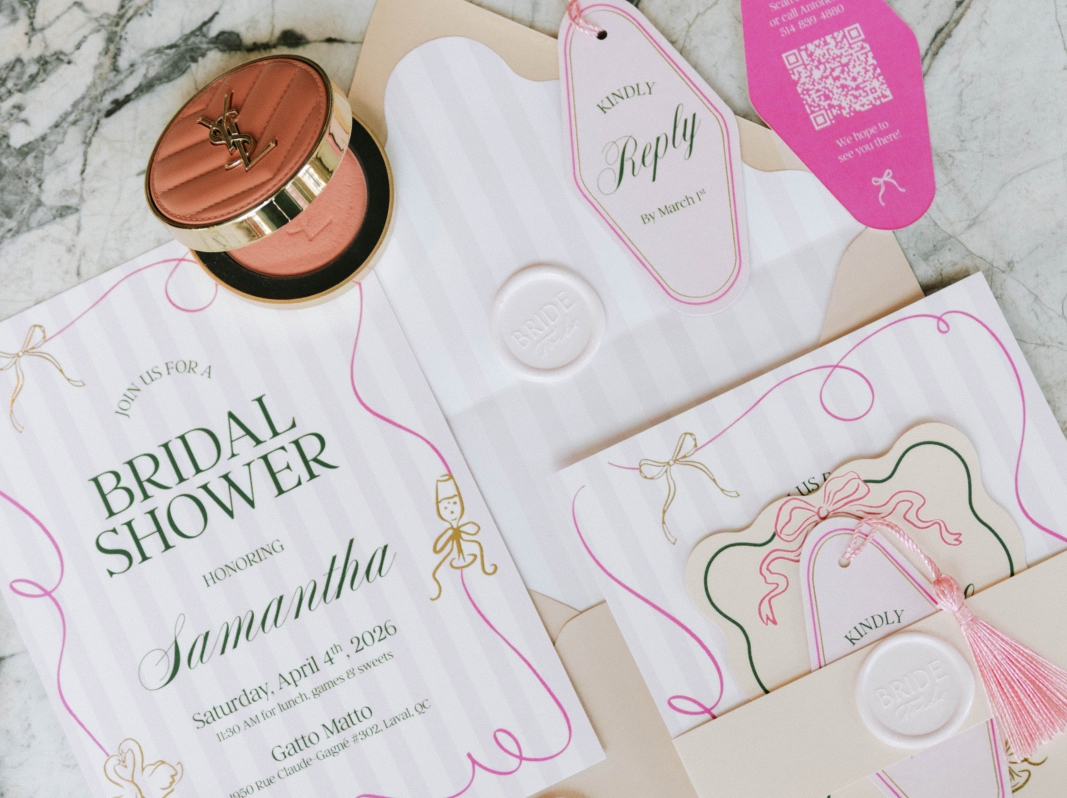
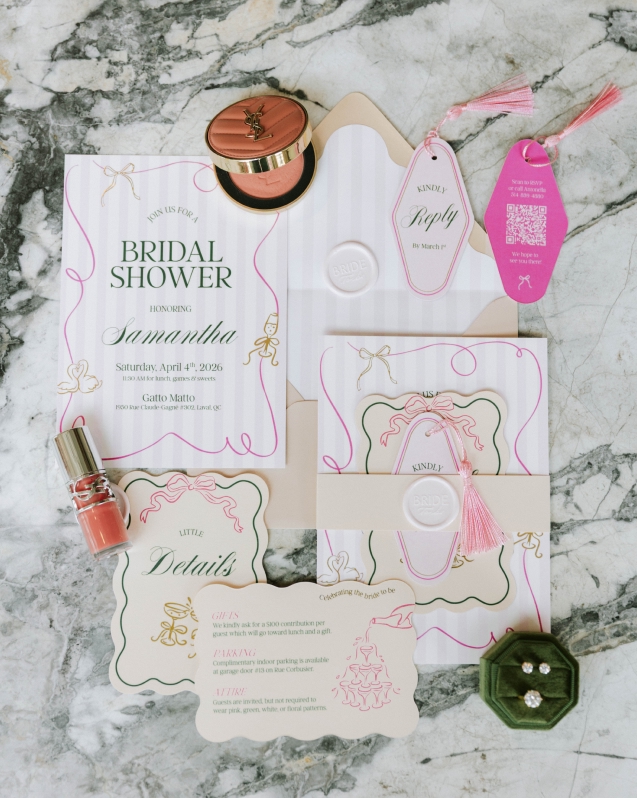
Typically a few months before the wedding, bridal showers celebrate the bride to be with a lunch and fun games. Whether celebrating formally or not, bridal shower invitations commonly include the bride’s name, the date, time, and location of the shower, RSVP details, and gift registry information. The design should reflect the formality, tone, and aesthetic of the shower, whether it’s a tea party, brunch, lunch, or another unique celebration.
Other bridal shower stationery and signage can include:
- A welcome sign
- Seating chart (if your guest count is greater than 50)
- Table numbers (if you have a seating chart)
- Place cards (depending on the formality of the event)
- A bar sign
- Menus (depending on the formality of the event)
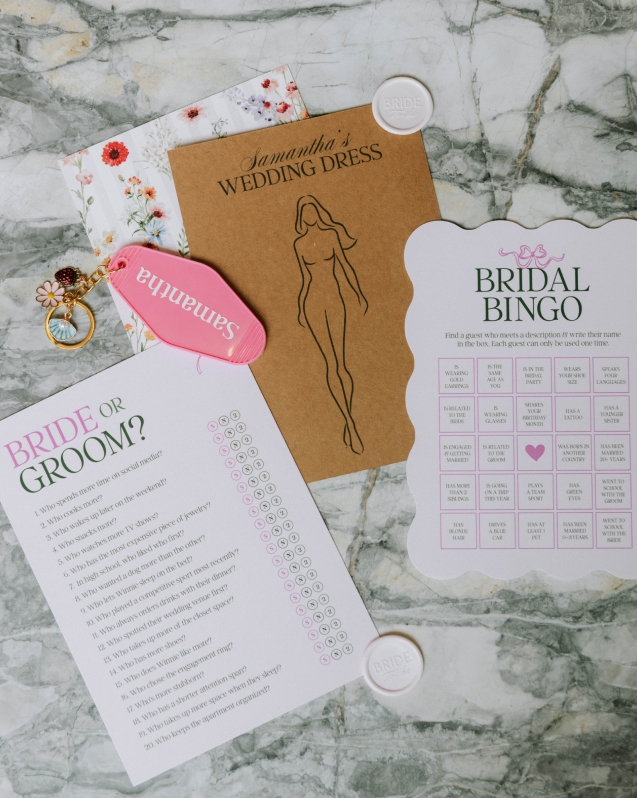
- Stationery for games such as bridal bingo, guess the dress, or a quiz.
Bachelor and Bachelorette Party
Bachelor and bachelorette parties are pre wedding celebrations that bring together close friends for a more social and often informal experience. These events can range from a single evening, a full weekend, or a week-long trip, depending on the group and location.
Stationery for these events is optional and depends on the tone of the celebration. In most cases, these events prioritize logistics over formal design. However, when the experience is more structured or multi day, printed or digital materials can significantly improve organization. For example, itineraries, schedules, or welcome notes help guests move through the event with clarity.
These invites are especially helpful when travel, accommodations, or multiple venues are involved, where clear communication becomes more important than design complexity.
Common bachelorette designs can include:
- Stationery for games
- Stickers
- Custom t-shirts, hats, or tote bags
- Stir sticks, water bottles, hangover kits, and snack packaging
Rehearsal Dinner
Rehearsal dinners typically follow your ceremony rehearsal. The couple or their families often host this event the night before the wedding, bringing together close family and the wedding party. For destination weddings, a rehearsal dinner is common with the entire guest list as a pre-wedding event.
For rehearsal dinner invitations, include the date, time, location, and any specific instructions for guests. If the event is small or informal, a digital invitation may be enough. However, for more formal or design focused dinners, printed stationery helps extend your wedding aesthetic into the weekend in a more cohesive way.
Furthermore, this event often marks the transition into the wedding weekend, making it a meaningful moment to begin aligning all guest experiences.
Other rehearsal dinner stationery and signage can include:
- A welcome sign
- Place cards (depending on the formality of the event)
- A bar sign
- Menus (depending on the formality of the event)
Before the Wedding
Save the Dates
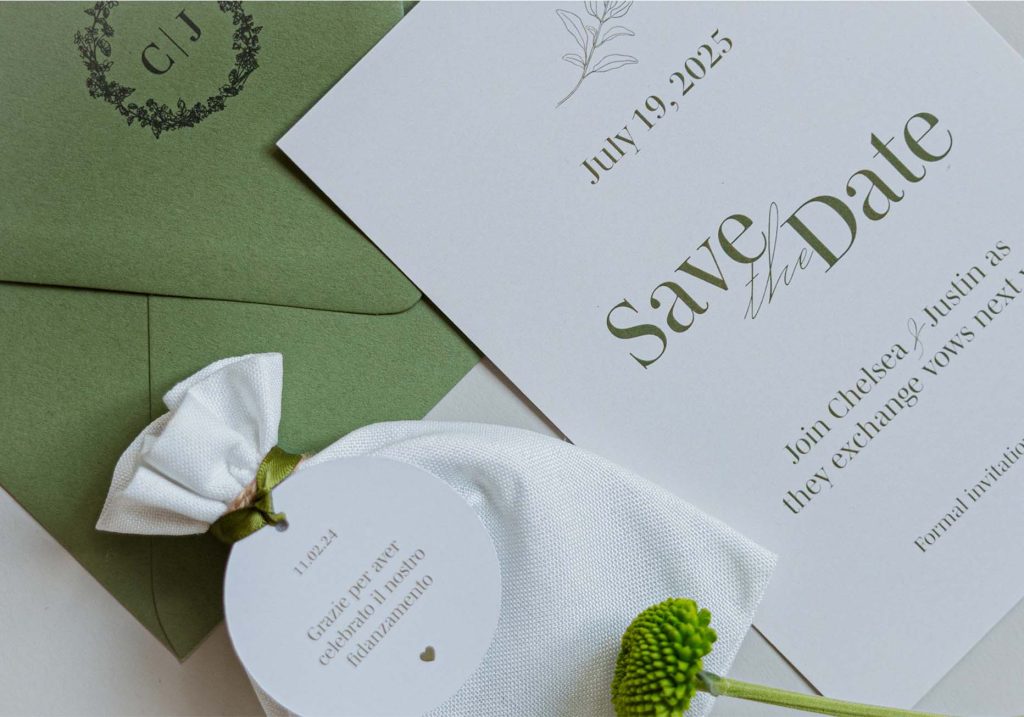
Save the dates give guests early notice of your wedding. They usually go out 6 to 8 months before your wedding, or 10 to 12 months before for destination weddings. Details include your names, wedding date, and general location, allowing guests to plan travel and time off well in advance. If you are hosting a local wedding with a shorter timeline, you may choose to skip them and move directly to invitations.
Importantly, save the dates also help establish early expectations around scale, formality, and travel requirements. Although simple in format, they play a key logistical role in the overall planning process.
If you’re looking to impress guests from the very first wedding touchpoint, printed invitations are a perfect surprise to receive in the mail.
Wedding Invitations
Your wedding day is the central event of the entire celebration. It brings together all of the planning, design, and anticipation into one shared experience for you and your guests. The way you introduce and communicate the event matters.
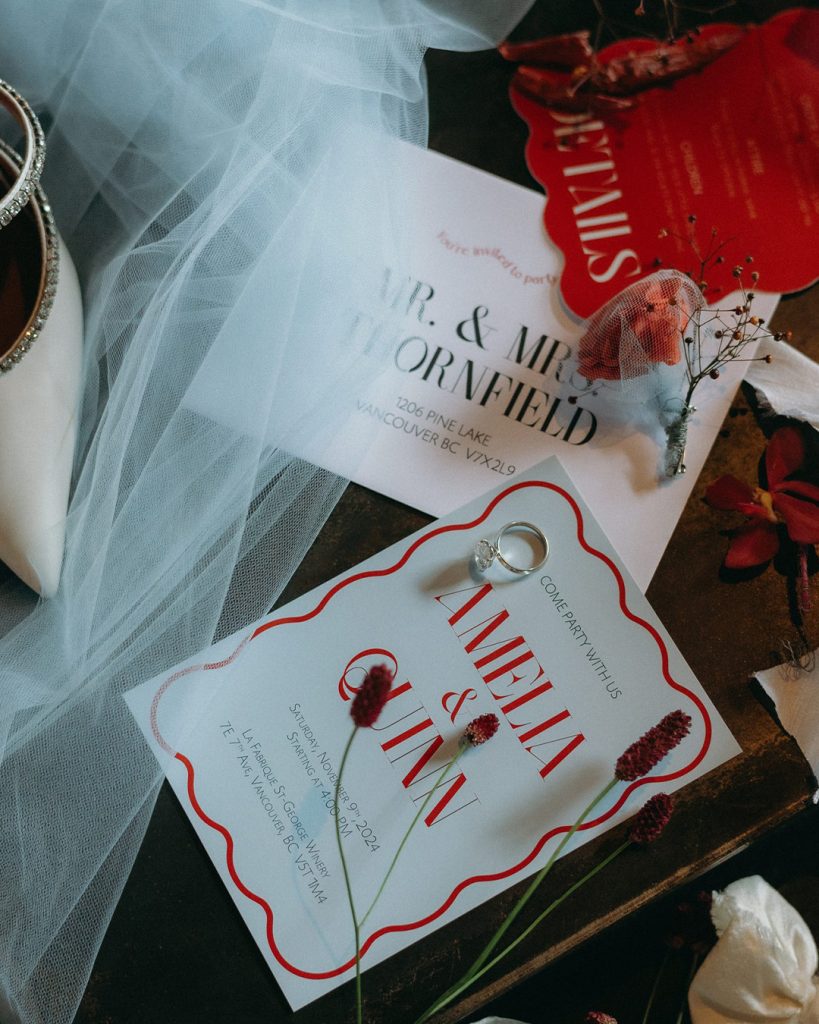
Invitations formally invite guests to your wedding and provide the key details. They include the name of the couple, date, time, location, and RSVP instructions. Typically, wedding invitations are sent 3 months before a local wedding. For destination weddings, you can send them 6 months in advance if you previously sent a save the date. Giving guests more time to plan and book is best.
At its simplest, an invitation can be a single card that communicates all essential information clearly and efficiently. However, many couples choose to expand this into a full invitation suite depending on the level of detail, formality, or design they want to achieve.
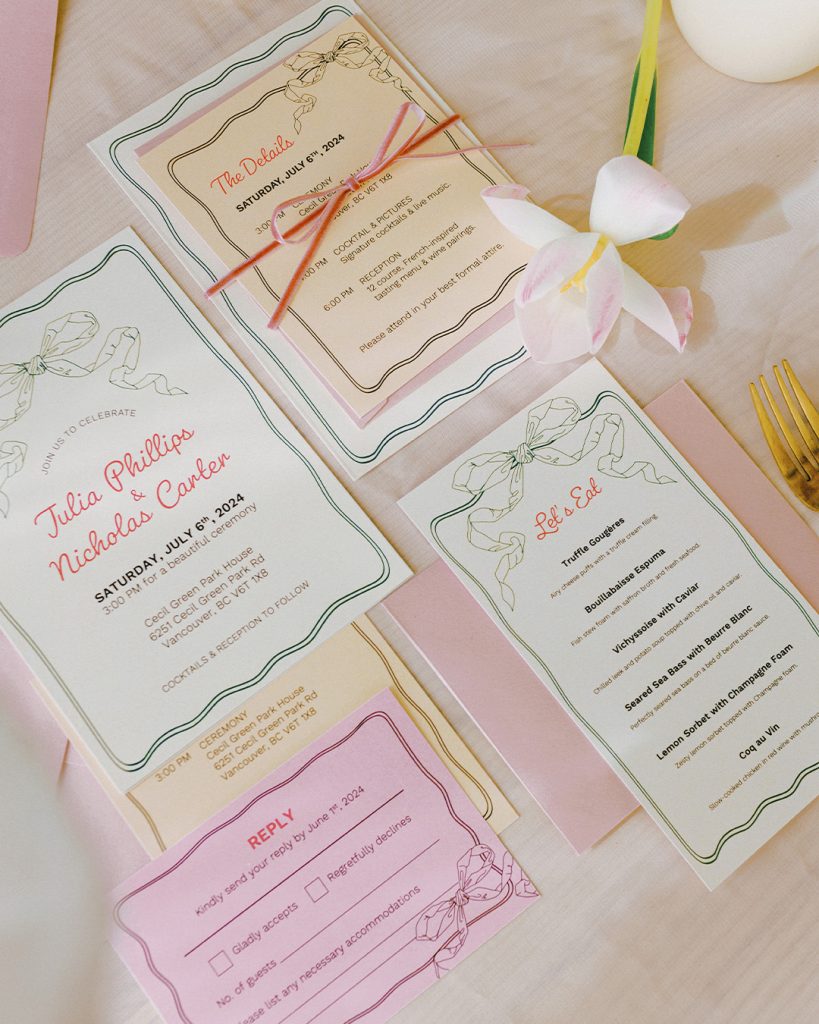
An invitation suite allows you to separate information into multiple coordinated pieces so each element feels clear and easy to navigate. For example, the main invitation focuses on the core details, while additional cards can hold logistical or weekend specific information. This approach is especially useful for weddings with multiple events or guests traveling from out of town.
At this stage, your wedding stationery becomes more structured and intentional. Whether you choose a minimal invitation or a more layered suite, the goal is the same: to create a cohesive and easy to understand introduction to your wedding.
Details Cards
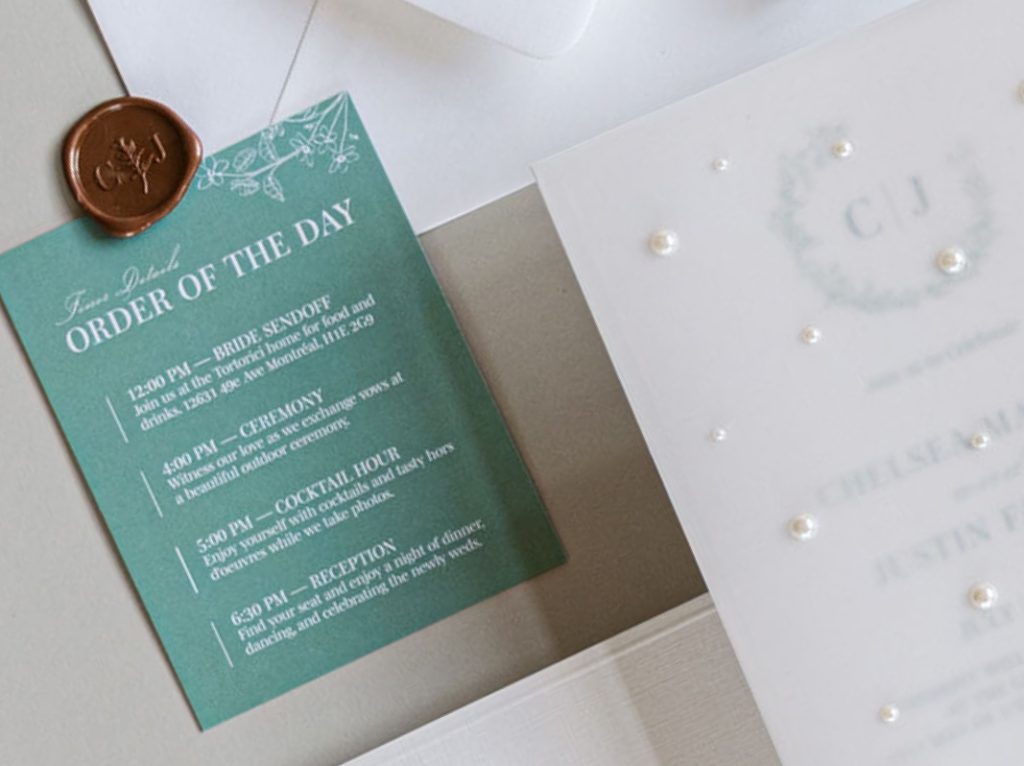
Details cards share information that doesn’t fit on the main invitation. This may include accommodation options, transportation, dress code, or a timeline of the day. They are especially helpful for multi day events or destination weddings.
By separating logistical details from the main invitation, guests can quickly find the information they need without overwhelming the primary design. This approach works especially well when guests travel or attend multiple events.
RSVP Cards
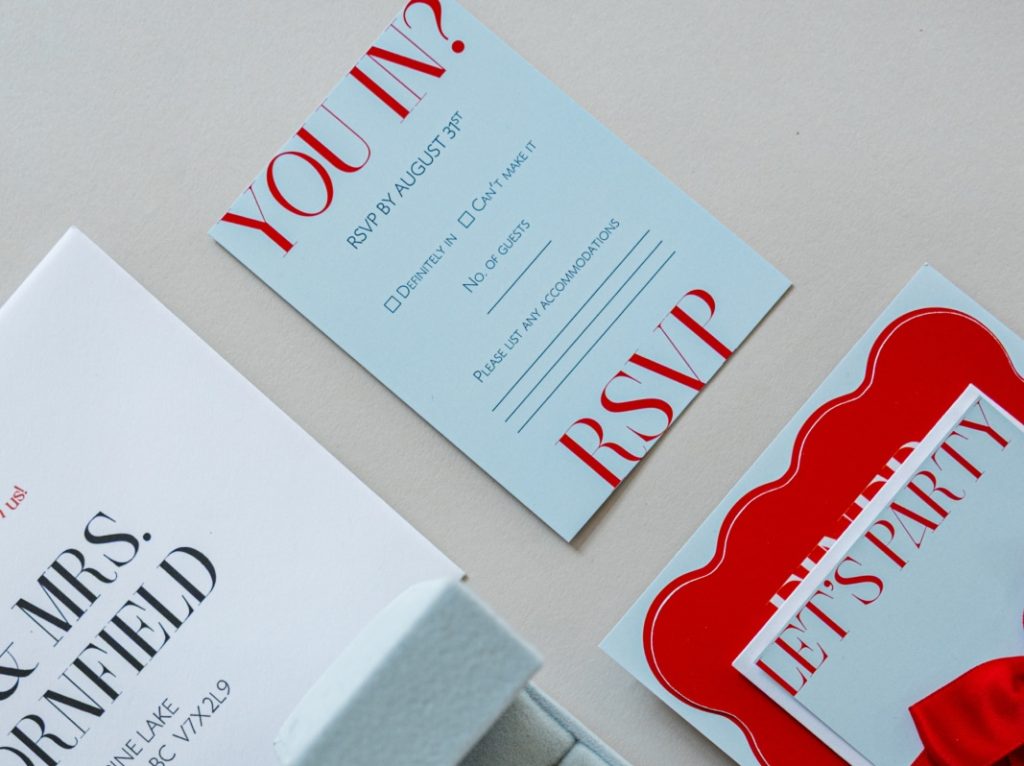
RSVP cards typically include the RSVP deadline and instructions. You can also include meal selections or child related details if you omit a details card.
Traditional RSVP cards are mail back cards meaning guests fill them out by hand and mail them back to the couple. This format includes a small envelope for the card with postage, making it easy for guests to return.
Modern RSVP cards feature instructions for an online response either accompanied by a QR code or website link. Guests then complete a digital RSVP, which can include questions about meal selections, number of attendees, allergies, and more.
RSVP timing directly impacts catering, seating, and vendor coordination, making this one of the most operationally important elements of your stationery suite. These cards should be as straightforward as possible.
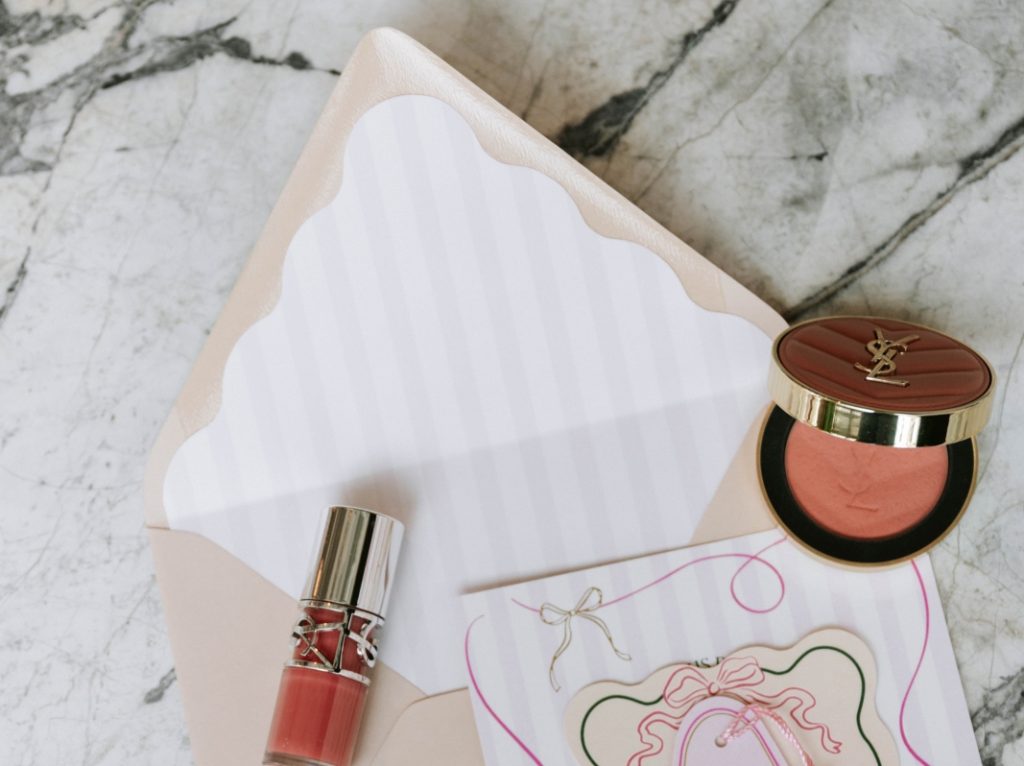
Envelope Liners
Envelope liners add an additional layer of design to your invitation suite. Although optional, envelope liners create a strong first impression as soon as guests open the envelope.
They are often used to introduce pattern, illustration, or color in a more expressive way. Because they appear before the invitation, they build anticipation and set the tone before guests read any information.
When used intentionally, envelope liners reinforce your visual identity in a subtle but memorable way.
Envelopes
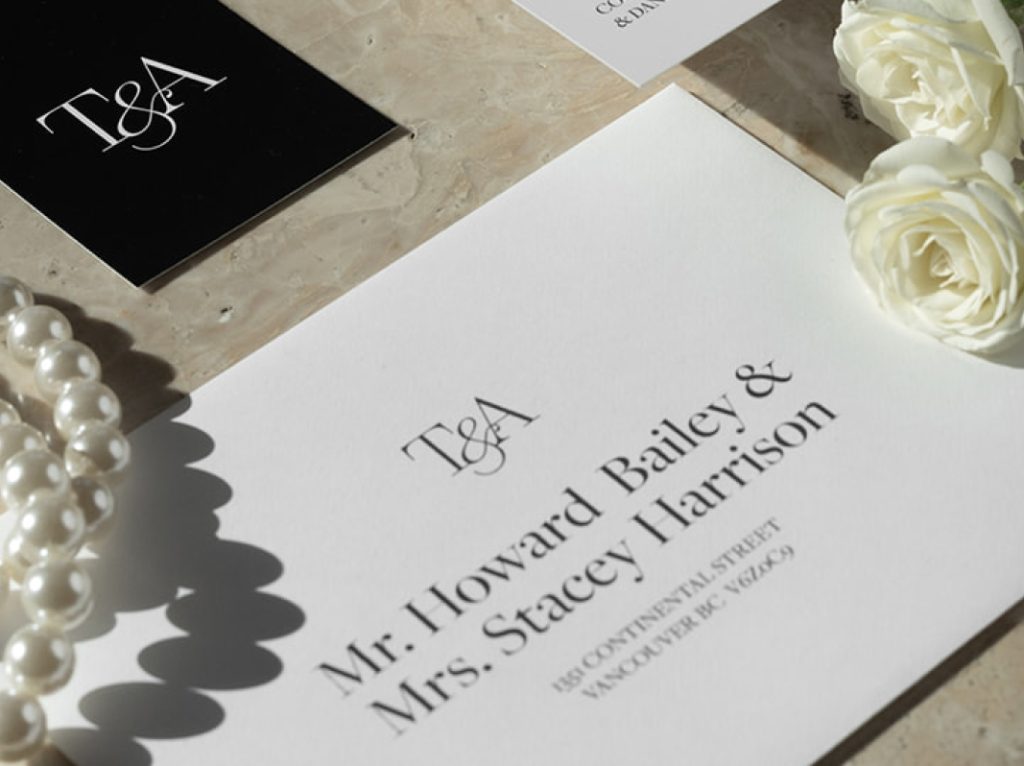
Envelopes are both functional and design driven. They protect your invitation suite while also setting expectations for what’s inside.
They are often the first physical interaction guests have with your wedding stationery. As a result, paper choice, addressing style, and finishing details all contribute to the overall impression.
Consider including a sticker or wax seal, or opting for a color or die cut shape for more visual interest. Your choice of design for the stamp also plays a role in the first impression.
On the Wedding Day
On the wedding day, stationery becomes part of the environment. These pieces provide details for guests while contributing to the overall atmosphere.
Wedding Itineraries
Wedding itineraries outline the schedule of events across your wedding weekend. They are especially useful for multi day celebrations, destination weddings, or events with multiple locations.
You can include these in your invitation suite, share them digitally, or provide them as printed pieces when guests arrive to their hotel, etc. A clear itinerary helps guests understand timing, locations, and expectations, reducing confusion and allowing the weekend to flow more smoothly.
In addition, itineraries help guests feel more comfortable and prepared, particularly when they are traveling or attending several events in a short period of time. This makes them a valuable tool for both organization and overall guest experience.
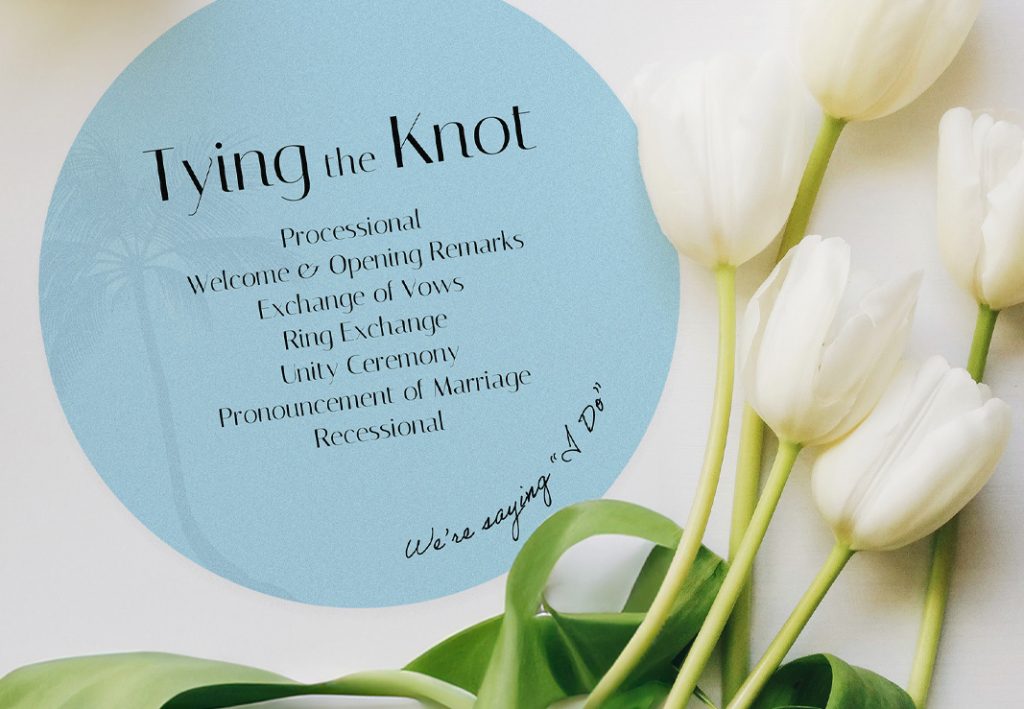
Ceremony Programs
Ceremony programs outline the order of events during your ceremony. They may include readings, music, or wedding party details, and are most useful for formal or longer ceremonies, although they remain optional for simpler formats.
Programs help guests follow along and understand the structure of the ceremony, which is especially valuable for multicultural or blended ceremonies. In addition, this structure allows guests to feel more oriented and present throughout the experience.
Beyond function, ceremony programs can also add context or storytelling elements that make the ceremony feel more personal and engaging.
Vow Booklets
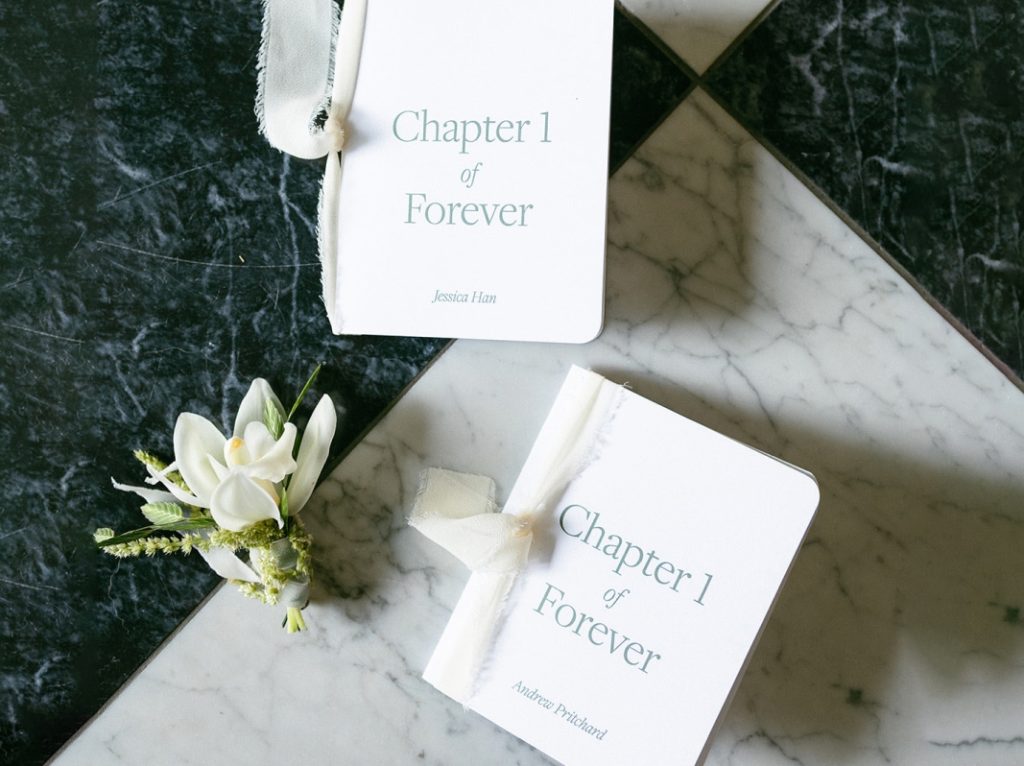
Vow booklets are a stationery piece designed to hold your written vows during the ceremony. As part of your overall suite, vow booklets can be designed to match your typography, color palette, and material choices. This allows them to integrate seamlessly with other ceremony details rather than feeling like a separate element.
In addition to their visual role, vow booklets serve a practical purpose. Rather than reading from loose paper or a phone, you can keep your vows organized in a format that feels aligned with the significance of the moment.
After the wedding, they also become a meaningful keepsake.
Place Cards
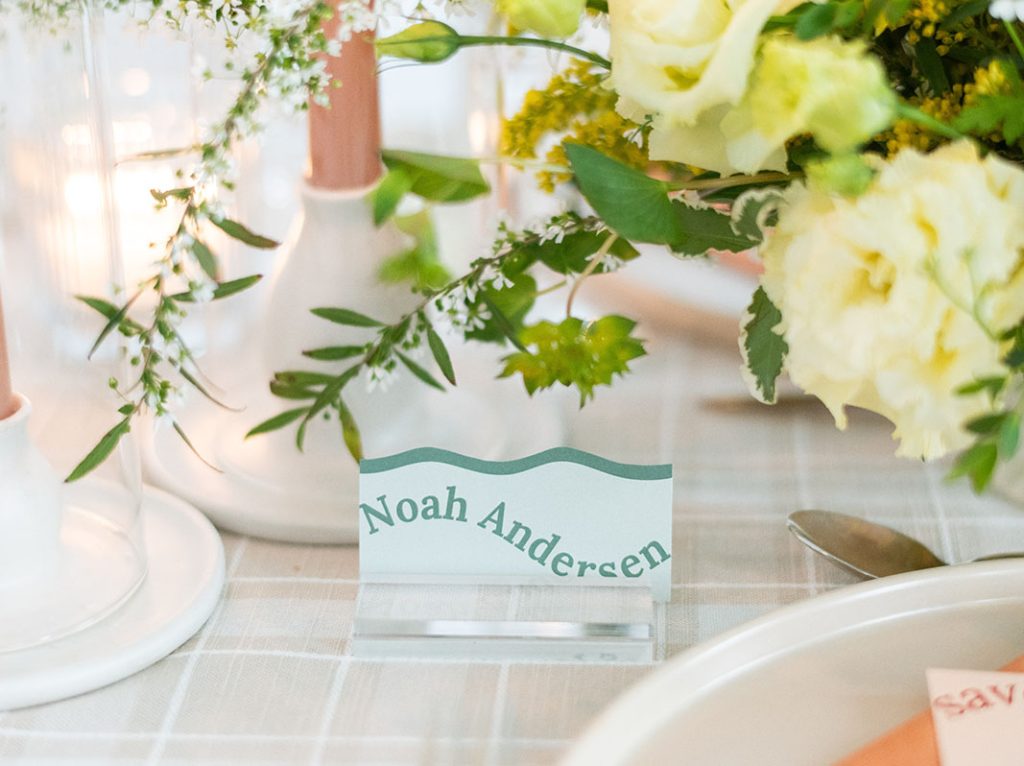
Place cards guide guests to their assigned seats. Each place card lists a guest’s name and marks their assigned seat at the table. They are essential for assigned seating, as they prevent confusion and keep the reception flowing smoothly. Without them, guests may hesitate or search for their seat, which can disrupt timing and service flow.
In addition, place cards also support catering and venue coordination by organizing guest placement in advance. This becomes especially important for dietary requirements or dinner with pre-selected meals.
Beyond function, they also contribute to the table design and can either blend seamlessly or stand out as a feature depending on your aesthetic direction.
Menus
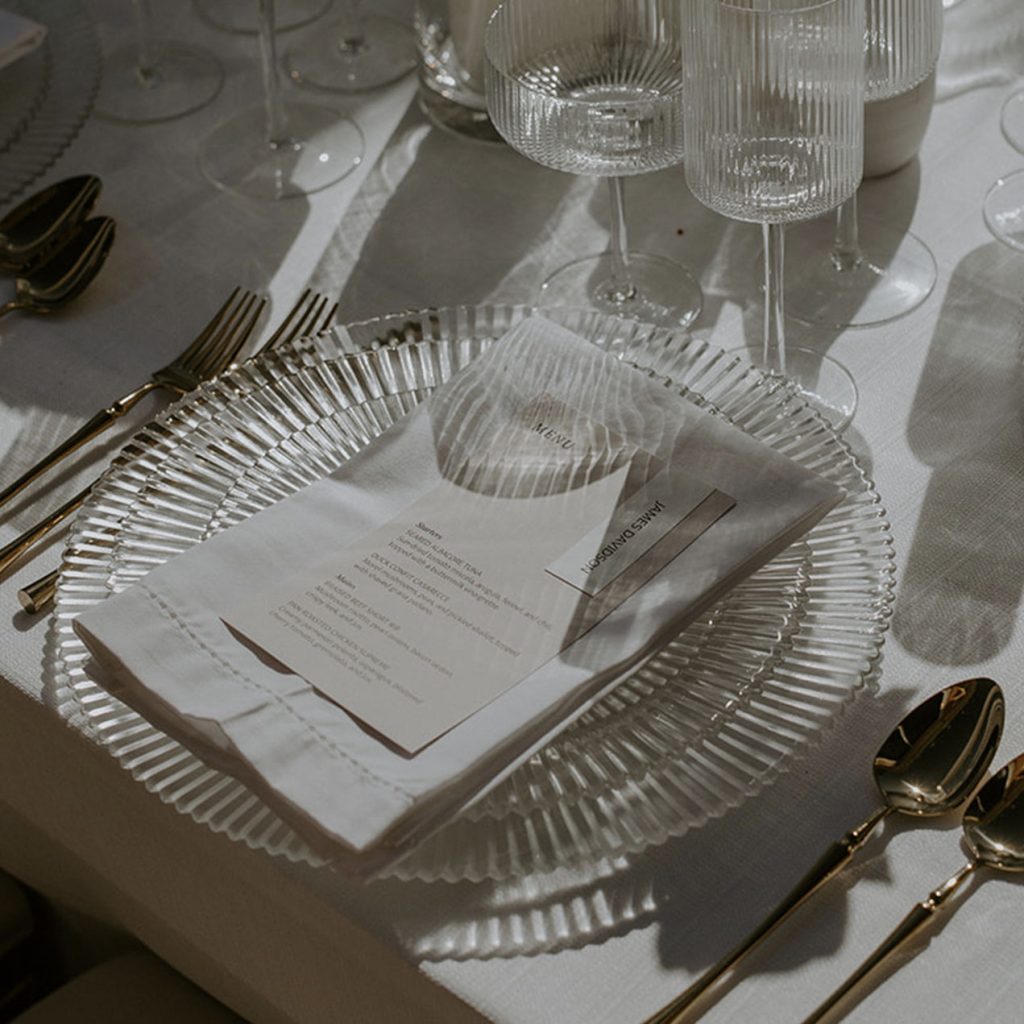
Menus are typically placed at each seat and become part of the tablescape decor. They show guests what will be served during the reception. While most common for plated dinners, menus can also introduce buffet selections or outline dishes for a family style service. An alternative for buffet style service are food labels or a larger display menu to provide clearer communication for guests moving through the space.
In addition to outlining the meal, menus also set expectations for pacing and structure, especially when you serve multiple courses. This reduces uncertainty and supports a smoother dining experience.
Menus are one of the few stationery pieces guests physically handle during the reception. This is an opportunity to bring together paper, texture, and design to create something thoughtful and memorable. Working with a designer ensures these pieces fit together beautifully in your tablescape with all the other elements such as plateware, flatware, drinkware, linens, and florals. Guests and photographers will capture menus as part of your tablescape, so design them with intention.
Wedding Favour Tags
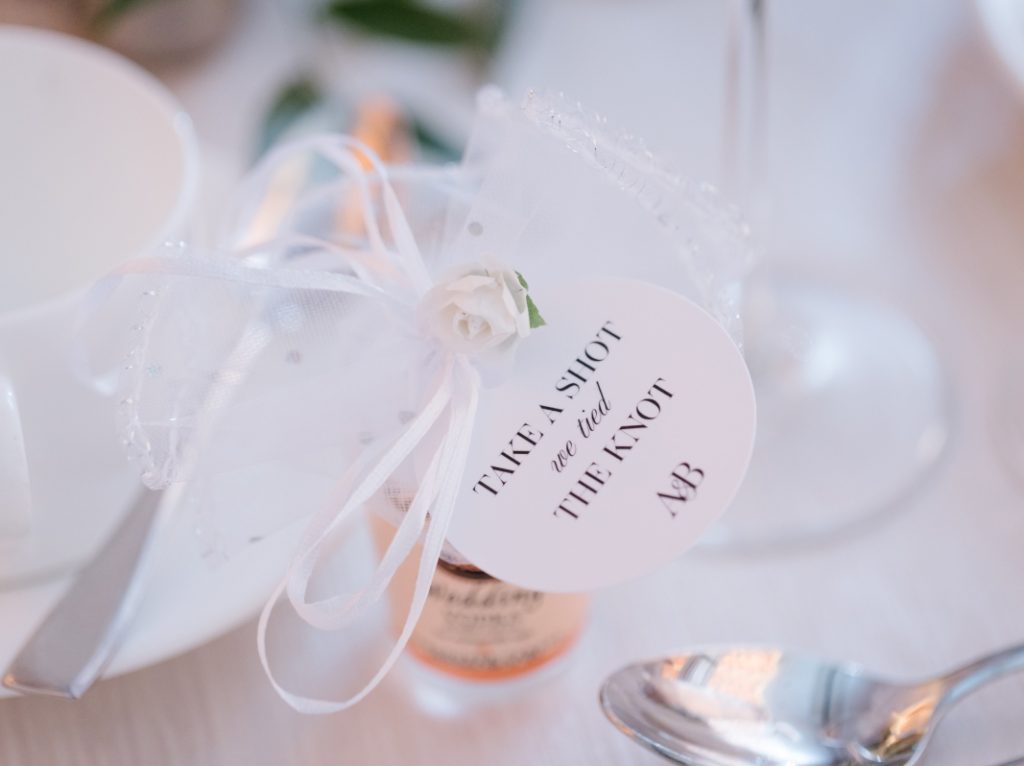
Favour tags add a finishing detail to guest favours and help maintain visual consistency across your wedding stationery. Tags can include heartfelt messages, thank yous, the wedding date, and a monogram or the couple’s names.
The way you attach wedding favour tags to each gift also affects overall design consistency. Think about whether sticking them directly to the item or packaging is best or if a ribbon would work better.
Place wedding favours at each seat or on a table near an exit with clear signage so guests are more likely to see and take them. This is typically the last element guests will touch and keep from your wedding, so intentional design and placement is key.
After the Wedding
After the wedding, stationery shifts from instruction to appreciation. This stage focuses on closing the guest experience thoughtfully and maintaining connection after the event.
Wedding Brunch
A wedding brunch typically takes place the day after the wedding and serves as a relaxed opportunity to gather with close friends and family before the celebrations conclude. Multi day and destination weddings commonly include this event, often hosted for out of town guests or the wedding party.
Stationery for a wedding brunch can include invitations, menus, or simple signage depending on the formality of the event. You can send the invitation separately or include it with the main wedding invitation or weekend itinerary.
In addition, clear communication around timing, location, and any hosting details ensures guests can attend easily, especially after a full day of celebrations.
Thank You Cards
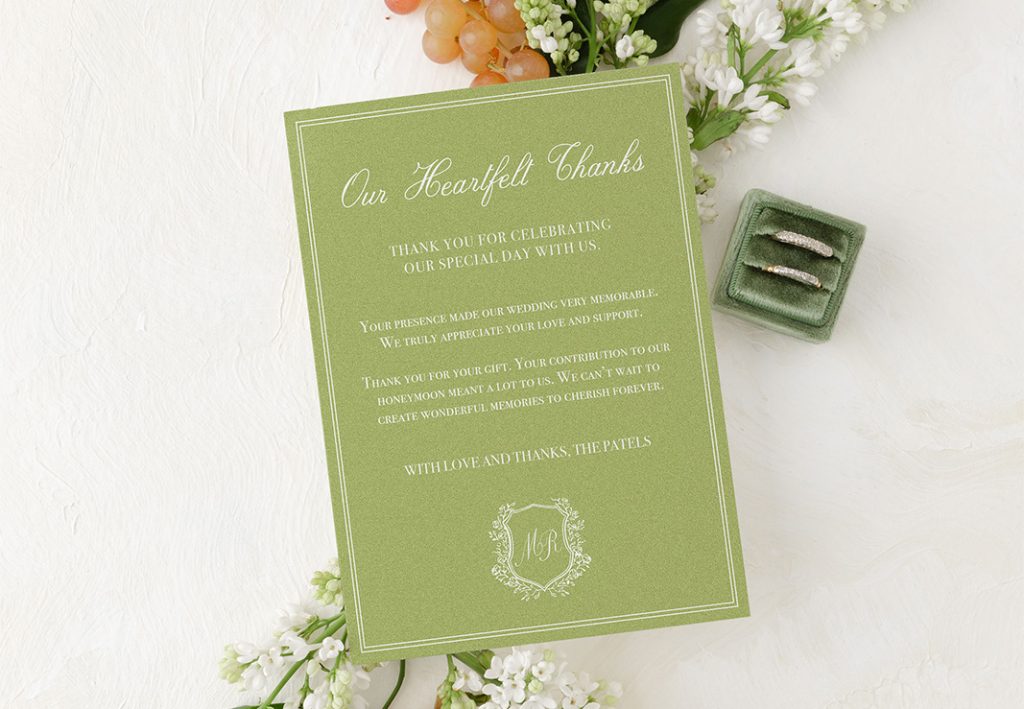
Thank you cards are sent after the wedding to express appreciation for guests and gifts. You typically mail them within 2 months, and you can include a photo from your wedding along with a printed message or handwritten note.
In addition, many couples choose to reference specific gifts, shared moments, or guest contributions, which makes this piece both functional and emotionally meaningful while still staying aligned with your overall wedding stationery design.
Extending Your Wedding Stationery Into Signage
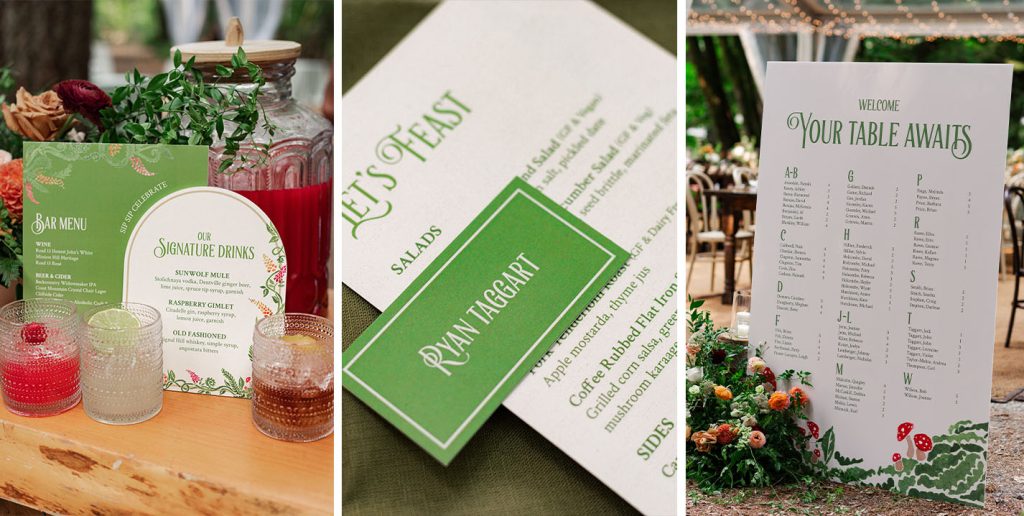
Wedding signage plays a complementary role to stationery. While stationery focuses on personal communication, signage guides guests through physical space. This includes welcome signs, seating charts, bar menus, and directional signage. These pieces are larger in scale and designed for visibility across the venue.
Together, wedding stationery and signage form a complete guest communication system that enhances the guest experience and the overall wedding aesthetic. For more detail, you can explore the full wedding signage guide in my blog here.
Bringing Your Wedding Stationery Together
Not every piece of wedding stationery is required. Your selection depends on your wedding format, guest needs, and overall priorities. Each piece should serve a clear purpose, whether that is communication, guidance, or design support. When chosen intentionally, wedding stationery becomes a connected system rather than a collection of individual items. Taken together, all elements create a seamless guest journey from the first announcement to the final thank you.
If you want a cohesive approach, work with me to design wedding stationery that feels intentional, functional, and aligned with your overall vision.


