
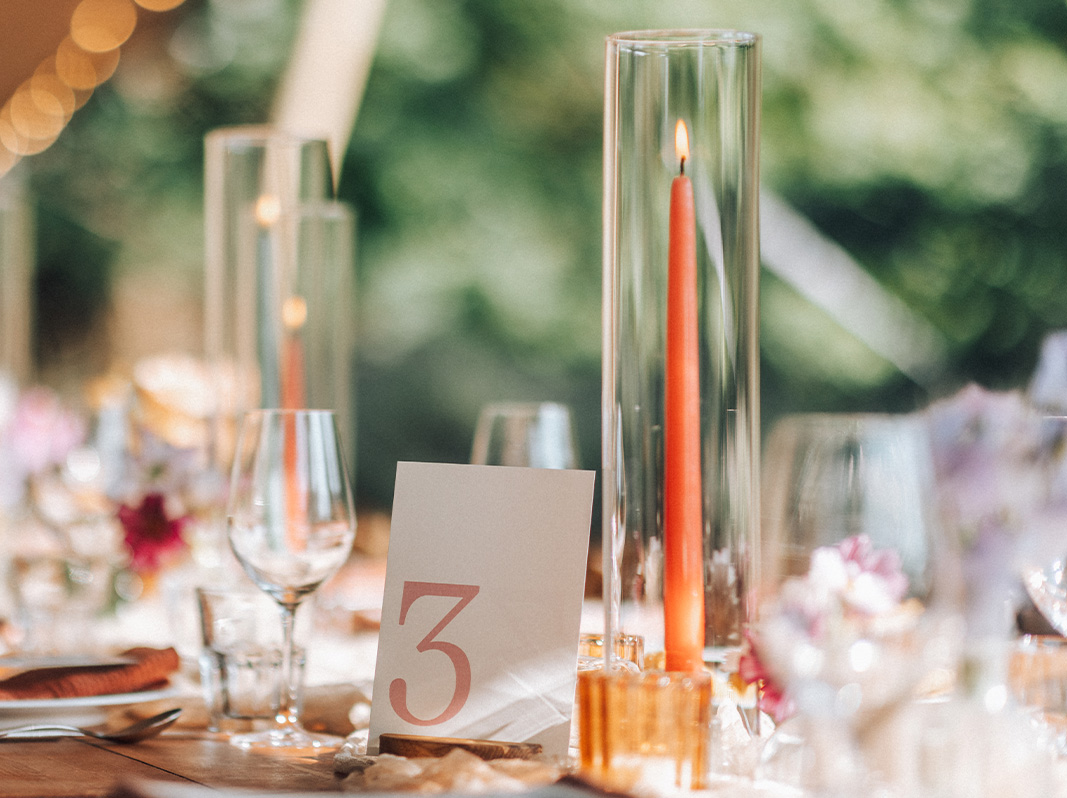
Table numbers for wedding decor go beyond simple styling elements. These pieces serve as essential tools for a well organized reception. Clear numbering guides guests from the seating chart to assigned tables, prevents crowding at the entrance, and allows catering teams to deliver meals efficiently. Without visible table identification, even the most beautiful reception can feel disjointed.
Any seated wedding with assigned tables requires thoughtful numbering. Plated dinners, family style service, and formal tented celebrations depend on clear table markers. Even buffet receptions benefit from structured identification.
Function does not exclude beauty. Table numbers sit at the center of every table and appear in countless photographs. This small detail influences the visual rhythm of the room.
Material choice shapes both performance and aesthetic impact. The right selection affects durability, scale, cost, and cohesion. When you work with me, I evaluate each element through both a logistical and design lens. The result is a detail that functions seamlessly and looks intentional.
Cardstock: Versatile ($-$$$$)
About Cardstock
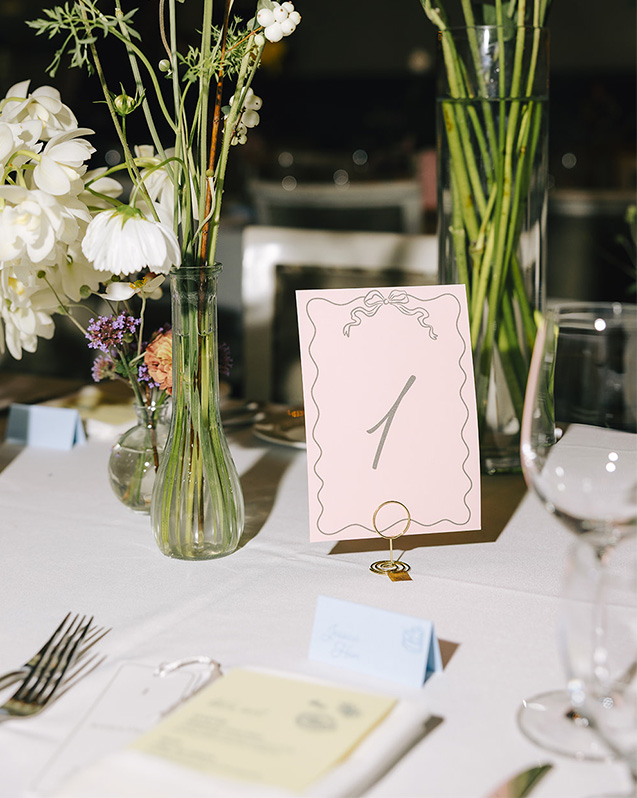
Cardstock table numbers offer endless versatility and subtle refinement. Beyond affordability, their appeal lies in the endless design possibilities. Die cut shapes and textured papers add dimension. Different print methods and finishings introduce tactile interest and elevate your table numbers.
Best Uses
Paper works beautifully when you want full creative control over typography, color, borders, and illustrations. It allows your table numbers to match your wedding palette precisely and maintain cohesion across your entire stationery suite.
Die cut silhouettes, layered shapes, and subtle texture can transform simple cardstock into a design feature. This material is ideal when customization and design continuity are priorities.
Considerations
Displaying paper numbers requires thoughtful planning. Wooden bases introduce warmth, while gold or black metal stands elevate elegance. Acrylic blocks offer a modern look, and frames provide structure for more formal receptions. The display choice significantly influences the overall aesthetic.
Outdoor weddings require heavier stock and supportive bases to prevent warping in humidity. Avoid exposing them to rain. Consider how weather conditions may affect stability before finalizing your material. Paper can also feel visually light next to dramatic florals unless scaled appropriately.
Double-sided printing is possible and often beneficial so guests can see your table numbers from all angles.
Price Point
Paper is typically the most cost-effective option, making customization accessible without a large investment. Costs increase with specialty printing methods, textured stock, and especially letterpress, which offers the most luxurious finish within the paper category.
Foamcore: Sturdy and Eye-Catching ($$)
About Foamcore
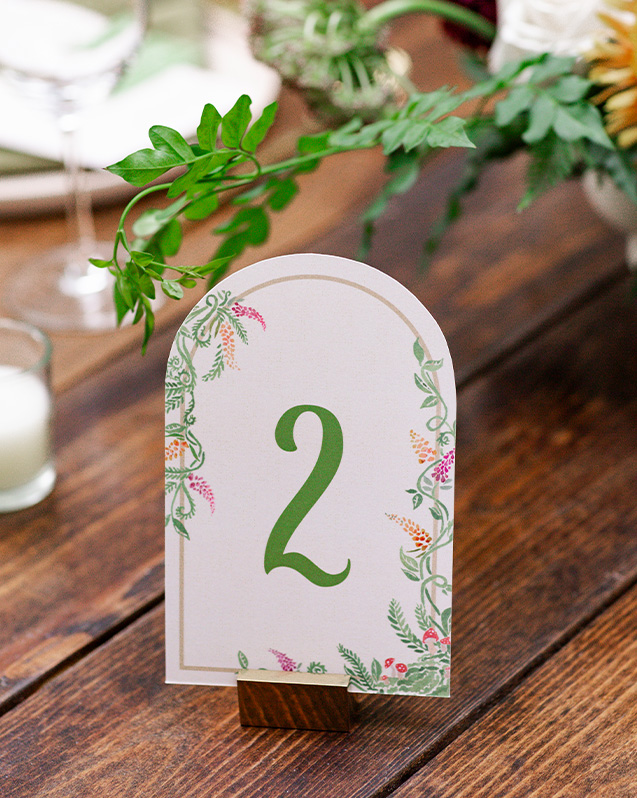
Foamcore numbers combine rigidity with affordability. Designs are digitally printed on cardstock and mounted onto a thicker material (foamcore). Unlike paper, foamcore’s thickness elevates the table number and gives it a presence that can stand out better in photographs.
Best Uses
Foamcore is a good option if you’re looking for a sturdy, lightweight material, and a design with a custom shape, illustrations, borders, lots of colors, or patterns. It’s not a good option if you’re looking for a design with texture, since the result is a smooth finish.
Considerations
A few considerations for foamcore table numbers are the stand, single-sided versus double-sided designs, and weather.
You can use a decorative stand for each table number, such as a wooden base, as long as it has a larger opening than cardstock stands, in order to fit the thicker material. Alternatively, you can opt for an easel attached to the back, which is added during the printing process.
If your design is single-sided, choose an attached easel. If your design is double-sided, use a stand.
In the event you host your wedding outdoors, foamcore table numbers will withstand windy conditions better than cardstock table numbers, but rain will still damage them.
Price Point
Due to the thickness of the material, foamcore is slightly more of an investment than paper, especially for custom cut shapes.
Acrylic: Sleek and Modern ($$$)
About Acrylic
Acrylic table numbers are fabricated from durable plastic panels available in countless colors and finishes. Options range from solid opaque hues to frosted, mirrored, or transparent varieties. Designs can be UV printed directly onto the surface, applied in precision cut vinyl, engraved, or created by layering two pieces of acrylic together for added depth and contrast.
The result feels clean, modern, and customizable. Acrylic allows for sharp detail, vibrant color, and architectural structure while maintaining a polished finish.
Best Uses
Acrylic works beautifully for contemporary weddings, bold color palettes, and graphic typography. It is ideal when you want crisp edges, saturated color, or layered dimensional design. Because it is available in so many finishes, acrylic can adapt to minimalist, playful, or formal aesthetics.
Considerations
Acrylic requires a coordinating base such as acrylic feet, slot bases, or metal channel stands. Thickness impacts stability, particularly for outdoor settings. Opaque and colored acrylics minimize glare concerns, while clear finishes may require more thoughtful placement.
Layered acrylic designs and double-sided applications increase fabrication complexity and weight. Vinyl applications provide flexibility, while UV printing delivers permanence and precision.
Although highly versatile, acrylic does not provide natural texture like stone or handmade paper. If organic variation is your priority, another material may be more appropriate.
Price Point
Acrylic falls within a moderate to higher investment range due to material cost and fabrication methods. UV printing, engraving, custom color matching, and layered construction increase the overall investment.
Marble: Modern & Impactful ($$$$)
About Marble
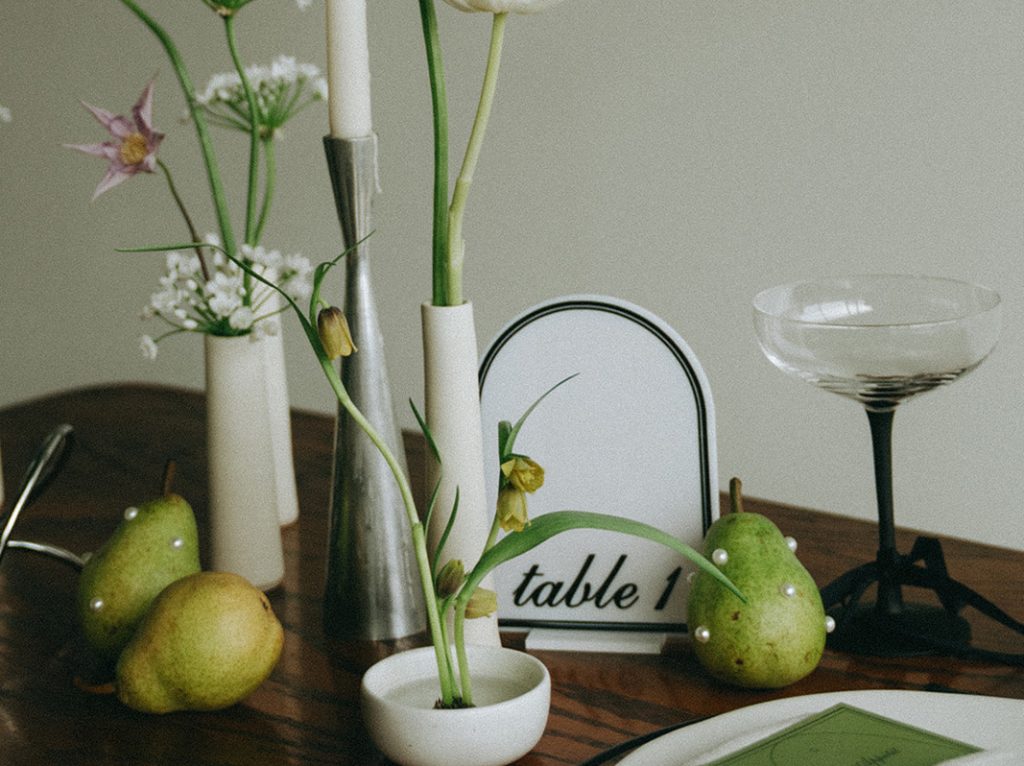
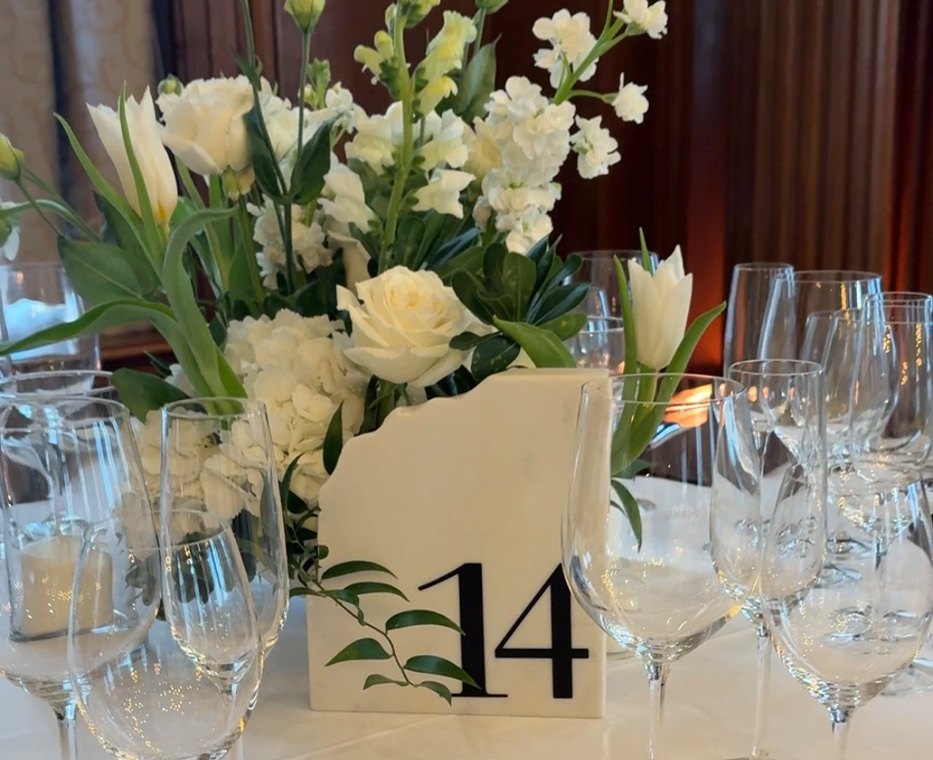
Marble table numbers are cut from natural stone slabs. They can be engraved or layered with vinyl decals. Each piece carries unique veining and a unique shape, ensuring subtle variation from table to table.
The material reads as modern and substantial. It functions almost as sculptural decor rather than simple signage. Because no two slabs are identical, marble introduces quiet movement and organic character into the tablescape.
Best Uses
Marble is ideal for formal weddings and curated tablescapes. It pairs beautifully with fine china, taper candles, and tailored compositions. The weight and permanence communicate intention and refinement.
It also works well when you want table numbers to feel integrated into the decor rather than placed on top of it.
Considerations
Marble’s weight allows it to stand independently. Carefully plan the scale to ensure readability without overwhelming the table. Transport and installation require careful handling to prevent chipping.
Intricate digital artwork is difficult to execute on stone, so typography driven designs are most successful. Production timelines are longer due to sourcing and engraving.
Marble performs well outdoors because of its weight and composition, which can be an advantage in open air venues.
Price Point
Marble is considered a premium option. Stone sourcing, engraving, finishing, and transport contribute to the higher investment.
Mixed Materials: Layered and Dimensional ($$$$)
About Mixed Materials
Mixed material table numbers combine elements to create depth. For example, pairing vinyl lettering on acrylic shapes, or pairing acrylic numbers on a foamcore base.
The layered construction introduces contrast and visual hierarchy. It allows one material to soften or enhance another, resulting in a design that feels intentional and dimensional.
Best Uses
This option works well for couples who want depth without moving into fully bespoke fabrication. It is particularly effective when you want to incorporate both texture and structure. For example, soft printed artwork can be protected beneath acrylic, or bold lettering can float above a colored backing.
Considerations
Adhesion must be durable. There are limitations to what can be designed for this application.
Outdoor suitability depends on the materials combined. Acrylic components perform well in humidity, while exposed paper elements require protection. Double-sided designs are possible but increase fabrication complexity and cost.
Price Point
Mixed materials typically sit at an upper investment range due to added fabrication steps and assembly time. The complexity of layering and the materials chosen directly impacts pricing.
Custom Materials: Fully Bespoke Statements ($$$$$)
About Custom Materials
Custom table numbers can be fabricated from wood panels, silver plates, specialty metals, hand cast resin, paintings, fabrics, or other unique materials that fit the wedding aesthetic.
These pieces become defining elements within the reception design rather than supporting details. Custom materials allow scale, finish, and form to be fully tailored to your vision.
Best Uses
Custom materials are best for couples seeking a one of a kind statement. They are especially impactful in highly designed environments where every element is curated. When the table numbers echo architectural details of the venue or incorporate meaningful materials, they feel deeply personal.
This approach works beautifully for luxury celebrations where elevated craftsmanship is part of the overall experience.
Considerations
Lead times are longer due to sourcing, sampling, and production. Revisions require additional fabrication time, so early approval is important.
This approach is not ideal for short timelines or tightly restricted budgets. However, when executed thoughtfully, it creates a signature detail that guests remember.
Price Point
Custom materials represent the highest investment category due to craftsmanship, specialty sourcing, and fabrication complexity. The level of customization directly influences the final cost.
Display Matters as Much as Material
Material alone does not determine success. Scale and placement are equally important. A beautiful table number loses impact if it tips over or disappears behind florals.
I evaluate table size, centrepiece height, linen color, and lighting before finalizing designs. A round table requires a different scale than a long banquet table. Height ensures visibility. Stability prevents disruption. When you work with me on custom designed Table Numbers, I manage these technical details for you. My role extends beyond design. I coordinate with your planned rental team to ensure seamless execution. Click here to learn more about my custom table numbers.
Conclusion
Table numbers guide guests, support service, and shape the atmosphere of your reception. Material choice influences cost, durability, and visual presence, while scale affects readability. Every detail contributes to how your reception feels and functions.
I design table numbers as part of a cohesive stationery suite, aligning typography, materials, and proportion across every piece. I evaluate venue conditions, lighting, centerpiece scale, and production timelines so nothing is left to chance.
If you’re looking for unique and thoughtful table numbers, let’s work together.


